

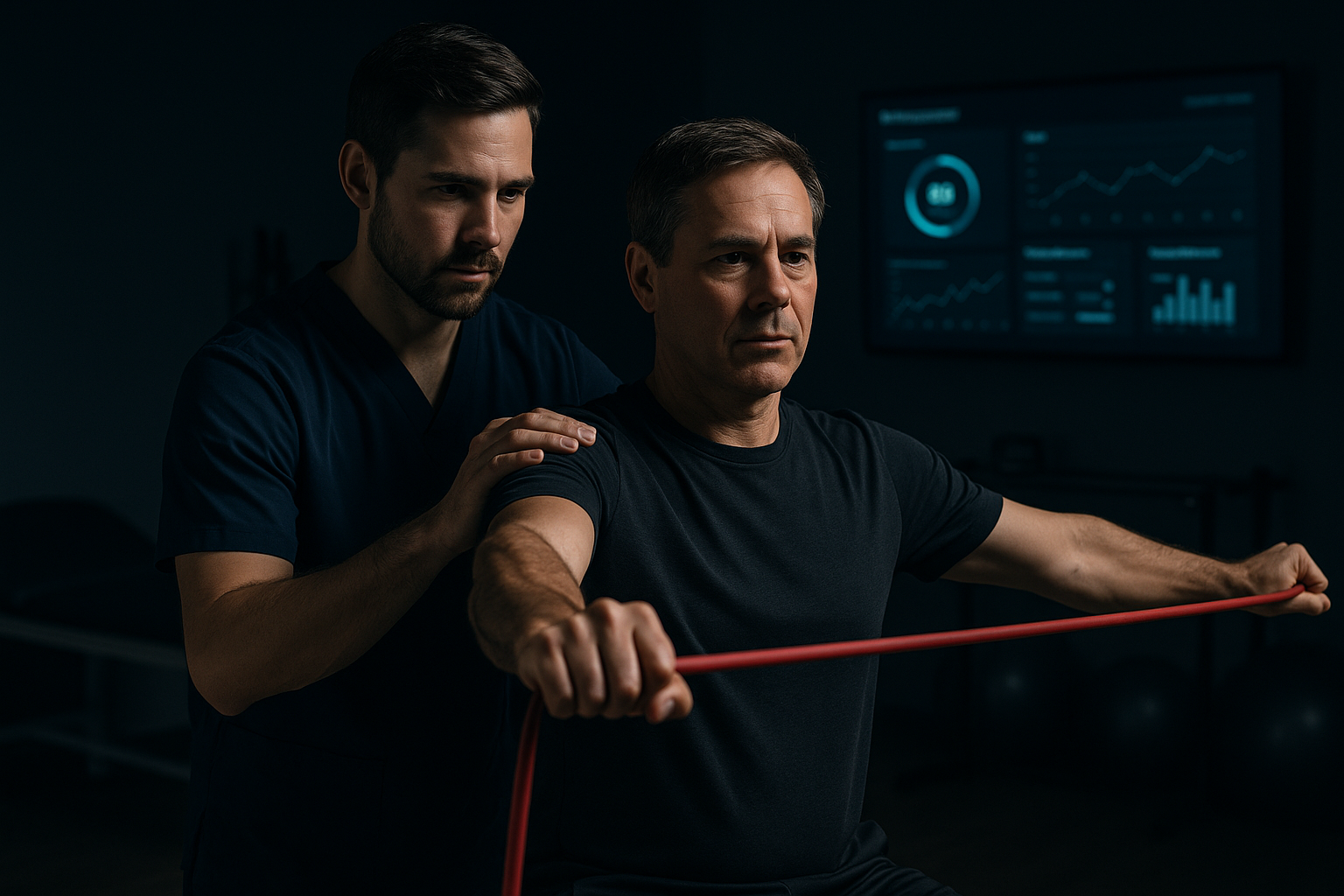
Musculoskeletal RTM only becomes billable and usable when a clinic ties a therapy plan to documented setup, qualifying device-use days, and monthly treatment-management work that includes the required patient communication when management codes are used. 123
That is why musculoskeletal remote therapeutic monitoring works best as an operations build, not as a gadget rollout. CMS frames RTM as monitoring non-physiologic data related to a therapeutic treatment, including musculoskeletal system status, therapy adherence, and therapy response, with patient information transmitted through a connected medical device. 13 For orthopedic and rehab clinics, that is a better fit than forcing a home exercise or recovery program into an RPM workflow built around physiologic metrics. 3
The code architecture you should build around first
The first step in a 60-day launch is deciding which code events your workflow must reliably create. The base RTM structure is straightforward in concept, even if the year-to-year details keep changing. CMS describes 98975 as initial setup and patient education, 98977 as musculoskeletal device supply, and 98980 plus 98981 as treatment-management time that requires at least one interactive communication with the patient or caregiver during the calendar month. 1 In the 2026 therapy update, CMS added 98979, 98984, and 98985 as sometimes therapy services and revised 98976 and 98977 so billing logic now reflects 2 to 15 day versus 16 to 30 day device-use periods. 2
Operationally, that means your billing build cannot rely on an old single-bucket RTM cheat sheet. For a musculoskeletal clinic, the revenue cycle team should map at least five events before go-live: setup completed, device or data feed active, qualifying day count reached, treatment-management time logged, and interactive communication documented when the management code requires it. 12 If your EHR, dashboard, or staff checklist cannot prove those events cleanly, the clinic is not ready to enroll patients yet.
- Setup event: patient education and activation tied to 98975. 1
- Supply event: for 2026 builds, distinguish short-use from full-month use instead of treating every month the same. 2
- Management event: cumulative monthly professional time plus at least one real-time or interactive communication where required. 12
- Ownership rule: one billing practitioner should own the monthly close for each patient. 3
What data a musculoskeletal RTM workflow should actually collect
CMS gives clinics a useful lane here. RTM is for non-physiologic therapeutic data, including musculoskeletal status, therapy adherence, and therapy response. 13 So the goal is not to mimic a cardiology RPM program. The goal is to capture the minimum data that helps the therapist or supervising clinician adjust treatment.
For most musculoskeletal programs, that means picking a small set of high-signal fields and using them every week. A practical starting build usually includes home exercise completion, pain trend, functional tolerance for the target activity, symptom flare flags, and clinician follow-up status. Those fields line up with the way telehealth and digital home-exercise literature describes remote rehab support: the technology works when it improves adherence, visibility, and timely professional guidance, not when it floods staff with unused metrics. 67
Two guardrails matter immediately. First, CMS says only one practitioner can bill remote monitoring per patient in a 30-day period. Second, CMS says RPM and RTM cannot both be billed together for the same patient in the same 30-day period. 3 So if a clinic runs separate device, rehab, and care-management teams, someone has to own the monthly decision tree before the first claim goes out.
FDA status and reimbursement are separate decisions
Many clinics blur product regulation and billing because both questions show up during implementation. They should not be handled by the same shortcut. The FDA explains that software functions that meet the definition of a device may run on mobile or general-purpose computing platforms, and that the agency applies a risk-based approach to device software functions. 5 CMS, meanwhile, is answering a different question: what service was furnished, by whom, with what documentation and coding logic. 123
The practical takeaway is simple. If your musculoskeletal monitoring product makes device-like diagnostic or treatment claims, the product team needs an FDA and intended-use review. If your clinic wants to bill RTM, the operations team needs a defensible therapy workflow, coding map, and documentation standard. One does not replace the other. 5 In a 60-day rollout, it is smart to freeze marketing language, patient education text, and support scripts in week one so the clinic is not promising more than the product is cleared or designed to do.
A usable 60-day rollout plan for a musculoskeletal clinic
The fastest clean launch is usually a two-cycle build, one month to stand up the workflow and one month to run a controlled pilot.
Days 1 to 15: define the patient cohort, finalize the treatment-plan template, choose the monitoring fields, and decide which staff role owns setup, monthly review, and claim close. Build the note templates now, especially the setup note and monthly management note. 123
Days 16 to 30: configure the device or software feed, train staff on how qualifying days will be counted, and create a simple month-end QA checklist. At this stage, clinics should also script the interactive communication step so it is consistent and easy to document. 12
Days 31 to 45: enroll a small pilot cohort. Musculoskeletal programs do better when they start with patients whose home exercise plan is already central to recovery, such as post-operative rehab or persistent low back pain pathways. The telehealth evidence base supports this cautious rollout, showing that allied health interventions delivered through telehealth can achieve similar outcomes, safety, satisfaction, and adherence compared with face-to-face delivery in many settings. 6
Days 46 to 60: close the first billing cycle, audit every patient against the code requirements, and fix workflow leaks before expanding. The point of the first 60 days is not scale. It is proving that staff can generate the right clinical action, documentation trail, and claim package every month without improvising.
The documentation stack that prevents denials and rework
Most RTM failures are boring. They come from missing timestamps, weak ownership, and notes that describe data but not care. A musculoskeletal clinic should treat the following documentation stack as non-negotiable.
- Plan of care: the musculoskeletal problem, the treatment being monitored, the expected use of remote data, and what decisions the clinician will make from it. Therapists providing RTM must do so under a therapy plan of care and use the appropriate therapy modifiers. 2
- Setup note: date, education delivered, successful activation, and patient understanding for 98975. 1
- Day-count evidence: dashboard or audit trail showing whether the patient hit the relevant day threshold for the supply code in the current code year. 2
- Monthly management log: cumulative time, reviewer name, issues found, action taken, and the date of the patient or caregiver communication for management services. 12
- Billing ownership: one practitioner assigned to the 30-day close so the clinic does not violate the single-practitioner rule. 3
If physical therapist assistants or occupational therapy assistants are involved, the clinic also needs a modifier policy. CMS says certain RTM services are subject to the de minimis standard and may require CQ or CO when furnished in whole or in part by assistants under the relevant supervision rules. 2 That is worth deciding before the pilot, not after the first rejected claim.
The mistakes that make an RTM launch look busier than it really is
The most common operational mistake is treating RTM like software adoption. A patient downloads an app, staff see a dashboard, and everyone assumes the service is ready to bill. That is not enough. CMS is paying for a monitored therapeutic workflow, not for login activity. 13
The second mistake is forgetting the monthly close rules. Clinics often collect adherence data all month and then realize no one logged management time or documented the required communication. The third mistake is mixing RPM and RTM logic in the same program. CMS explicitly separates those pathways, so your internal playbook has to separate them too. 3
The fourth mistake is product overstatement. If the platform is helping with adherence, symptom tracking, and response visibility, say that. Do not imply diagnostic performance or regulatory status the product does not actually have. The FDA’s software guidance exists because software claims matter. 5
Why RTM is the right commercial lane for musculoskeletal clinics
Musculoskeletal care is full of treatment plans that succeed or fail based on what happens between visits. That is exactly where RTM earns its keep. The clinic needs visibility into whether the patient is following the program, whether symptoms are moving in the right direction, and when a human needs to intervene. CMS built RTM to handle that kind of therapeutic monitoring, and the published rehab literature supports the idea that telehealth and digitally supported home exercise can maintain outcomes while improving access and adherence. 367
For Sensor Bio and similar vendors, the cleanest position is RTM-first. It is the honest fit for a workflow centered on adherence, response, and longitudinal musculoskeletal follow-through. The clinics that will succeed are the ones that keep the build simple: narrow patient cohort, clear plan of care, current-year code map, strict documentation, and a real month-end QA process.
If a clinic can do those five things, 60 days is enough to launch a usable musculoskeletal RTM workflow. If it cannot, another 60 days of buying technology will not fix the underlying process.
References
- CMS MLN Matters MM12446, 2022 Annual Update to the Therapy Code List
- CMS MLN Matters MM14250, Therapy Code List 2026 Annual Update
- CMS MLN901705, Telehealth and Remote Monitoring
- CMS Therapy Services
- FDA Device Software Functions Including Mobile Medical Applications
- Delivery of Allied Health Interventions Using Telehealth Modalities: A Rapid Systematic Review of Randomized Controlled Trials
- Digital technology integration in home-based exercise: a systematic review of research evolution, applications, and impact mechanisms