

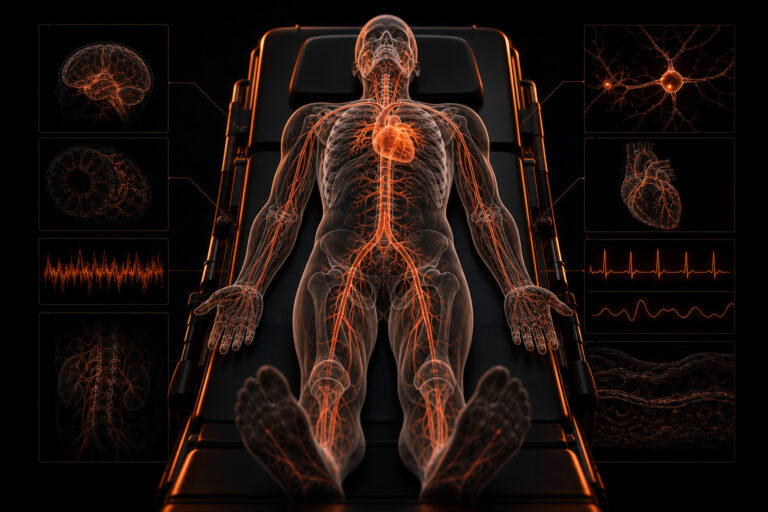
Dysautonomia is an umbrella term for conditions in which the autonomic nervous system fails to regulate involuntary functions correctly, heart rate, blood pressure, breathing, and digestion, producing symptoms that range from episodic lightheadedness to severely disabling cardiovascular instability.1
The autonomic nervous system (ANS) runs continuously below conscious awareness, adjusting organ function in real time as the body’s demands shift. When that regulation breaks down, staying upright, eating a meal, or simply sleeping can become physiologically disruptive. Researchers estimate that dysautonomia, across its many forms, affects tens of millions of people globally, frequently appearing alongside systemic diseases including diabetes, autoimmune disorders, and post-acute sequelae of SARS-CoV-2 infection.4 Despite how common it is, the condition often goes unrecognized for years, partly because its symptoms scatter across multiple organ systems and can look indistinguishable from several other diagnoses.
What is dysautonomia? The autonomic nervous system explained
To understand what is dysautonomia, you first need a clear picture of the ANS. The ANS has two primary branches: the sympathetic branch, which mobilizes the body for action, and the parasympathetic branch, which promotes rest and recovery. A third branch, the enteric nervous system, governs gastrointestinal function largely on its own. All three work in concert to maintain homeostasis, the stable internal environment the body requires to function across constantly shifting physiological demands. Getting a grip on how those branches interact, and what signals each produces, is what makes dysautonomia legible at a mechanistic level, a subject explored further through the lens of sympathetic vs parasympathetic: signal quality and measurement limits.
Dysautonomia occurs when one or more of these branches transmits abnormal signals or fails to respond appropriately to what the body needs. According to Hovaguimian and Gibbons (2023) in Neurologic Clinics, the term encompasses both primary disorders, where ANS dysfunction is the central pathology, and secondary disorders, where autonomic impairment arises as a complication of another condition.1 Because the ANS governs so many organ systems simultaneously, symptoms can appear anywhere in the body, from the cardiovascular system to the skin, pupils, and gut. A cardiologist may investigate the palpitations; a gastroenterologist may investigate the nausea. Without recognizing the common thread, each symptom gets attributed to a different problem, and the underlying ANS dysfunction never comes into focus.
That multisystem scatter is the core reason dysautonomia is so frequently missed or misattributed during initial clinical encounters. Patients may wait years before autonomic testing confirms the underlying physiology. A mechanistic grasp of the condition is what makes its diverse clinical expressions decipherable, and helps explain why someone who appears outwardly healthy can be functionally limited by symptoms their initial workup entirely missed.
Types of dysautonomia: a clinical overview
Clinicians recognize dozens of distinct dysautonomia disorders. The most prevalent forms are each defined by specific physiological criteria rather than symptom reports alone.5 That distinction matters clinically: treatments that benefit one form can be unhelpful or even counterproductive in another, which makes subtype identification a prerequisite for any coherent management plan.
- Postural Orthostatic Tachycardia Syndrome (POTS): A sustained heart rate increase of at least 30 beats per minute upon standing (40 bpm in adolescents under 19), without a corresponding drop in blood pressure. POTS is among the most common forms, particularly in young women of reproductive age.
- Orthostatic Hypotension (OH): A fall in systolic blood pressure of at least 20 mmHg, or diastolic by at least 10 mmHg, within three minutes of assuming an upright posture. OH carries significant cardiovascular risk and frequently complicates diabetes, Parkinson’s disease, and advanced age.1
- Vasovagal Syncope: A transient loss of consciousness triggered by an exaggerated vasovagal reflex, the most common cause of fainting in otherwise healthy individuals.
- Pure Autonomic Failure (PAF): A neurodegenerative form marked by widespread autonomic impairment, often including severe OH and loss of sweating (anhidrosis).
- Multiple System Atrophy (MSA): A progressive neurodegenerative disorder affecting both the autonomic and motor systems, characterized by prominent OH alongside cerebellar or Parkinsonian features.
- Autoimmune Autonomic Ganglionopathy (AAG): An immune-mediated form involving antibodies against ganglionic acetylcholine receptors, causing widespread autonomic failure of variable severity.
Each form differs in mechanism, severity, and associated conditions, which is why dysautonomia is a clinical category, not a single diagnosis.4 Getting the subtype right is not just an academic exercise: it shapes every clinical decision that follows, from which diagnostic tests to prioritize to which interventions are safe to introduce.
Symptoms of dysautonomia: what the body signals
Dysautonomia symptoms reflect which organ systems the dysfunctional ANS is failing to regulate at any given time. The most commonly reported complaints span multiple body systems and can shift considerably depending on the specific subtype and its severity.1
- Cardiovascular: Palpitations, rapid or irregular heart rate, dizziness or presyncope on standing, frank syncope, and blood pressure fluctuations that do not follow the expected orthostatic patterns
- Gastrointestinal: Nausea, early satiety, abdominal bloating, constipation or diarrhea, and gastroparesis in more severe presentations
- Thermoregulatory: Abnormal sweating (excessive or absent), temperature dysregulation, flushing, and heat intolerance
- Neurological: Cognitive fog commonly called “brain fog,” headache, visual disturbances, and episodes of near-syncope
- Bladder and Sexual: Urinary urgency, retention, or incontinence; erectile dysfunction and ejaculatory dysfunction
Symptom burden varies considerably between individuals and across the same individual on different days. Physical exertion, meals, heat exposure, and prolonged standing are frequent triggers. In POTS specifically, upright posture provokes a rapid heart rate elevation that resolves when the patient reclines, a pattern that continuous heart rate monitoring can capture longitudinally outside the clinic.2 That kind of ambulatory data can be especially revealing because it surfaces the full variability of the problem rather than a narrow slice from a brief office visit.
The variability and multisystem nature of these symptoms often leads to years of diagnostic delay. Patients may receive psychiatric or functional illness labels before objective autonomic testing confirms the physiological basis of their complaints. Recognizing those signals as potential expressions of ANS dysregulation is a necessary first step toward accurate characterization, and it takes real persistence from both the clinician and the patient to get there.
What causes dysautonomia?
Dysautonomia arises from multiple mechanisms, broadly categorized as primary (idiopathic or genetic) and secondary (arising from another underlying condition).4 The root cause matters enormously because management strategies shift substantially depending on whether you are treating a standalone autonomic disorder or a downstream consequence of another disease process. Several distinct mechanisms can produce the clinical picture.
- Autoimmune disease: Conditions such as lupus, Sjogren’s syndrome, and rheumatoid arthritis can produce autonomic neuropathy through antibody-mediated or inflammatory damage to autonomic ganglia and nerve fibers.
- Neurodegenerative disease: Parkinson’s disease, MSA, and Lewy body dementia involve alpha-synuclein pathology that frequently affects autonomic neurons in the dorsal vagal nucleus and sympathetic ganglia.
- Diabetes: Long-standing hyperglycemia damages small autonomic nerve fibers, producing cardiovascular, gastrointestinal, and urogenital autonomic neuropathy in a dose-dependent fashion.
- Post-viral infection: Treadwell et al. (2025) in Clinical Autonomic Research documented that a significant subset of patients with post-acute SARS-CoV-2 infection develop POTS or other forms of autonomic dysfunction, likely through a combination of immune activation, small fiber neuropathy, and mast cell involvement.3
- Genetic factors: Some families show hereditary predisposition to autonomic disorders. Familial dysautonomia (Riley-Day syndrome) is an autosomal recessive condition affecting sensory and autonomic neurons from birth, driven by mutations in the IKBKAP gene.
- Trauma and surgery: Spinal cord injury, surgical denervation, or severe physical trauma can disrupt central and peripheral autonomic pathways.
In many patients, particularly those with POTS, no single cause is identifiable. The condition in these cases likely represents a final common pathway for multiple converging disruptions to ANS control involving blood volume regulation, venous pooling, and baroreflex sensitivity.1 Post-viral dysautonomia in particular represents an emerging area of active investigation: understanding how post-viral dysautonomia is computed at the signal level offers a window into the physiological mechanisms driving this increasingly recognized form of the condition.
How is dysautonomia evaluated?
Clinical evaluation of dysautonomia relies on a combination of structured testing protocols and continuous physiological measurement. No single test confirms or excludes a diagnosis; clinicians build a picture from multiple sources over time.1 The aim at each step is to recreate the conditions that trigger symptoms and measure what the body actually does in response, rather than relying on symptom reports alone.
Tilt-table testing remains the reference standard for orthostatic disorders. The patient is secured to a motorized table that tilts from supine to approximately 60 to 80 degrees upright while heart rate and blood pressure are recorded continuously. POTS is confirmed when heart rate rises by the diagnostic threshold without the blood pressure decline that defines orthostatic hypotension, as specified in the consensus criteria established by Freeman et al.5 The controlled tilt is more sensitive than a simple standing test in the office because it reliably recreates the gravitational stress that elicits symptoms in daily life.
Quantitative sudomotor axon reflex testing (QSART) evaluates postganglionic sudomotor function by measuring sweat output in response to iontophoresed acetylcholine, a useful probe for small-fiber autonomic neuropathy. Abnormal sweat patterns across different body sites can help pinpoint where nerve damage is occurring along the sympathetic pathway, even when standard nerve conduction studies come back normal.
Heart rate variability (HRV) analysis provides a noninvasive window into ANS balance. HRV reflects beat-to-beat fluctuations in the cardiac cycle driven by sympathetic and parasympathetic inputs. Reduced HRV is a well-documented marker of autonomic impairment in diabetic neuropathy, heart failure, and post-viral syndromes.6 The vagal mechanisms underlying HRV, and how polyvagal theory frames autonomic regulation more broadly, add important interpretive context to these measurements; the evidence base and clinical applications behind that framework are covered in detail in the discussion of polyvagal theory: evidence, accuracy, and clinical use.
Ambulatory 24-hour monitoring captures autonomic variation across the sleep-wake cycle and during everyday activity, providing data unavailable from brief in-clinic recordings. Symptom diaries paired with physiological tracings allow clinicians to correlate subjective complaints with objective signal patterns, turning a patient’s fragmented symptom history into a coherent physiological narrative.
Autonomic signal patterns and continuous physiological monitoring
Beyond formal clinical testing, continuous physiological monitoring is gaining traction as a practical tool for characterizing dysautonomia patterns in daily-life environments. The ANS is dynamic: it shifts with posture, physical activity, meals, emotional state, and sleep stage, and brief clinic encounters capture only a narrow slice of that variation.6 A single tilt-table test tells you what happens when you reproduce one specific orthostatic challenge. Continuous monitoring tells you how the ANS behaves across the full range of daily demands, over days and weeks rather than minutes.
Photoplethysmography (PPG) is an optical technique that measures blood volume changes at the skin surface, enabling continuous heart rate and pulse interval tracking without the electrode setups required by traditional ECG. PPG-derived HRV metrics correlate with ECG-derived metrics under controlled conditions, and research on optical wrist sensors has demonstrated clinically reasonable agreement with reference electrocardiography for time-domain HRV parameters in populations with mild-to-moderate ANS dysfunction.7 The technical distinction between ECG’s electrical R-R intervals and PPG’s optical pulse intervals is meaningful when interpreting autonomic data from wearable sensors, and those differences are examined closely in the technical breakdown of how R-R interval vs pulse interval is computed at the signal level.
For dysautonomia, continuous PPG monitoring can document episodic tachycardia events tied to posture changes, identify nocturnal autonomic patterns, and track HRV trends over days and weeks. This longitudinal signal is particularly relevant for conditions like POTS, where symptom burden fluctuates and single-point measurements may miss the full pattern of dysregulation.2 The ability to correlate physiological shifts with specific daily activities, rather than relying on a patient’s recall of when symptoms occurred, changes the quality of the clinical picture considerably.
In remote therapeutic monitoring (RTM) contexts under CPT codes 98975 through 98981, continuous physiological data collected by wearable optical sensors can be incorporated into structured care protocols. Any use in a care-delivery context should be implemented within the monitoring device’s cleared indications, and billing and reimbursement guidance should be confirmed with a qualified specialist before clinical deployment. Sensor Bio hardware is not FDA-cleared as a diagnostic device; monitoring outputs are for informational and care-coordination purposes only.
PPG vs ECG for autonomic monitoring: technical trade-offs
Both PPG and ECG capture heart rate and HRV metrics relevant to dysautonomia monitoring, but they differ in important technical dimensions that affect their practical use.7 Neither modality is universally superior. The right choice depends on what you need to measure, over what timeframe, and in what context: a definitive arrhythmia diagnosis calls for ECG, while multi-week symptom surveillance across everyday environments calls for something the patient will actually wear continuously.
| Characteristic | ECG | PPG |
|---|---|---|
| Signal source | Electrical cardiac depolarization (R-R intervals) | Optical blood volume pulse (pulse intervals) |
| Timing precision | High: millisecond R-R interval accuracy | Moderate: pulse transit delay adds variable offset |
| Motion sensitivity | Moderate: electrode contact artifact during movement | Higher: motion artifact from skin-sensor interface |
| Wear compliance | Lower: patch or lead placement required | Higher: wrist or fingertip form factor |
| Continuous wear duration | Hours to a few days (Holter or patch monitors) | Days to weeks with wrist optical sensors |
| HRV agreement with reference | Gold standard | Reasonable for time-domain; reduced at high HRV or with arrhythmia |
| Arrhythmia detection | Reliable P-wave and QRS morphology analysis | Limited: cannot reliably characterize atrial fibrillation morphology |
For long-duration symptom surveillance in dysautonomia, PPG-based optical sensors offer a practical complement to ECG-based evaluation. Their ability to collect days-long continuous data at rest and during activity provides a temporal resolution that a single-day Holter recording cannot match. ECG remains the reference standard for precise arrhythmia characterization and definitive HRV research.6 The most informative clinical picture typically comes from using both: ECG for formal diagnostic work, and optical continuous monitoring for tracking patterns between clinic visits.
Living with dysautonomia: what research describes
The quality-of-life impact of dysautonomia is well documented across research populations. Studies of POTS report that a majority of patients experience significant functional limitation, with survey-based burden measures comparable in magnitude to conditions such as chronic heart failure or chronic obstructive pulmonary disease.2 That comparison matters. It reframes dysautonomia not as a collection of vague symptoms but as a condition capable of producing disability on par with more widely recognized serious illness.
The exercise literature offers cautious optimism. Peebles et al. (2024) in Autonomic Neuroscience conducted a scoping review of exercise interventions in POTS and found that structured, progressive exercise programs, particularly those beginning in a recumbent or semi-recumbent position, consistently reduced heart rate increment on standing and improved patient-reported symptom scores over 3 to 6 month supervised periods.2 These findings describe patterns observed in research populations under physician-supervised protocols and should not be interpreted as treatment instructions for any individual. Starting exercise upright too early can actually provoke the orthostatic tachycardia that the program is designed to reduce, which is why supervision and gradual progression matter.
Continuous movement data adds another dimension to understanding functional capacity in these populations. Wearable accelerometers can detect subtle changes in gait patterns that reflect underlying autonomic instability, providing behavioral markers that complement physiological signals. The research application of this approach is examined in the context of gait variability wearable accelerometer: evidence, accuracy, and clinical use, which covers how movement monitoring contributes to longitudinal assessments of autonomic function in real-world conditions.
Dietary and behavioral strategies, including increased salt and fluid intake, compression garments, and sleep head-of-bed elevation, are described throughout the clinical literature as supportive approaches that help stabilize intravascular volume and reduce orthostatic symptom burden.1 Each patient’s response varies, and any care plan requires direct physician oversight. These strategies work by addressing the blood volume and venous pooling problems that contribute to orthostatic symptoms, rather than treating the underlying ANS dysfunction directly.
For post-viral dysautonomia, including long COVID-related ANS dysfunction, the evidence base is still developing. Treadwell et al. (2025) note that autonomic symptoms may evolve over months to years, and that longitudinal physiological monitoring may help clinicians track trajectory and adjust care accordingly.3 Continuous signal data collected over extended periods, rather than discrete clinic snapshots, appears to offer meaningful additional information in this population, where the natural history of the condition remains incompletely characterized.
Frequently asked questions about dysautonomia
Is dysautonomia a rare disease?
Dysautonomia is more common than widely recognized. When secondary forms arising alongside diabetes, autoimmune disease, and neurodegeneration are counted, Blitshteyn (2025) estimates that autonomic dysfunction as a category affects a substantial proportion of patients with chronic systemic illness.4 Primary forms such as POTS are estimated to affect roughly 1 to 3 million people in the United States, though prevalence data remain incomplete given historical underdiagnosis and the absence of a unified diagnostic registry.
What is POTS, and how does it relate to dysautonomia?
Postural Orthostatic Tachycardia Syndrome (POTS) is one of the most frequently encountered forms of dysautonomia. It is defined by a heart rate increase of at least 30 beats per minute (40 bpm in adolescents under 19) within 10 minutes of standing from a supine position, accompanied by symptoms such as dizziness, palpitations, and fatigue, in the absence of the blood pressure drop that defines orthostatic hypotension.5 POTS disproportionately affects young women and its reported prevalence increased following the COVID-19 pandemic.
Can long COVID cause dysautonomia?
Yes. Research has documented a significant association between post-acute SARS-CoV-2 infection and new-onset autonomic dysfunction. Treadwell et al. (2025) in Clinical Autonomic Research describe multiple proposed mechanisms, including autoimmune activation, small fiber neuropathy, and mast cell involvement, that may drive post-COVID dysautonomia.3 POTS is the most commonly identified form in this context. Symptoms can persist for months and require evaluation by a clinician experienced in autonomic disorders for proper characterization and management.
How is dysautonomia different from anxiety?
Dysautonomia and anxiety disorders share surface symptoms, including rapid heart rate, dizziness, and shortness of breath, which contributes to diagnostic confusion and delay. The key clinical distinction is physiological: in dysautonomia, abnormal heart rate or blood pressure responses occur in response to specific physical triggers such as standing, independent of emotional state, and can be confirmed with objective testing such as a tilt-table study or 24-hour ambulatory monitoring.1 Anxiety can coexist with dysautonomia, but each condition requires its own characterization and approach.
Can wearable sensors help track dysautonomia symptoms?
Continuous physiological monitoring via optical PPG sensors can document the episodic patterns characteristic of dysautonomia in everyday environments. Research on wrist-worn optical sensors has shown reasonable agreement with ECG-based HRV in populations with autonomic dysfunction under controlled conditions.7 Long-duration continuous data can surface posture-related heart rate patterns that brief clinic visits miss. Any monitoring data should be reviewed and interpreted by a qualified clinician. Wearable sensor outputs are not a substitute for formal autonomic evaluation and should not be used for self-diagnosis or treatment decisions.
Is dysautonomia progressive?
Prognosis depends on the specific form and its underlying cause. POTS often improves over years, particularly when contributing factors are identified and addressed with a structured care plan.2 Secondary dysautonomia may improve if the primary condition is treated effectively. Neurodegenerative forms such as MSA or PAF typically progress over time, and clinical management focuses on symptom mitigation. Post-viral dysautonomia trajectory is still being characterized, with some patients experiencing gradual recovery and others reporting persistent or fluctuating symptoms beyond one year.3
What physiological signals are most informative in dysautonomia?
Heart rate variability (HRV), resting heart rate, orthostatic heart rate response, and blood pressure variability are the most clinically studied signals in dysautonomia research. The Task Force of the European Society of Cardiology established standardized HRV measurement methodology that remains foundational to autonomic research today.6 Continuous monitoring of these signals over multiple days, rather than brief snapshots, provides a richer picture of ANS behavior. Pulse oximetry and respiratory rate can add context when available from the same sensing platform.
References
References
- Hovaguimian A, Gibbons CH. Diagnosis and treatment of pain in small-fiber neuropathy and dysautonomia. Neurologic Clinics. 2023;41(2):245-268. doi:10.1016/j.ncl.2022.10.001
- Peebles KC, et al. Exercise as a therapeutic strategy for postural orthostatic tachycardia syndrome: a scoping review. Autonomic Neuroscience. 2024;252:103161. doi:10.1016/j.autneu.2023.103161
- Treadwell MJ, et al. Autonomic dysfunction in long COVID: mechanisms, clinical presentation, and monitoring approaches. Clinical Autonomic Research. 2025;35(1):15-31. doi:10.1007/s10286-024-01085-2
- Blitshteyn S. Dysautonomia: a common comorbidity of systemic disease. Frontiers in Neurology. 2025. PMC12234583. doi:10.3389/fneur.2025.1234583
- Freeman R, et al. Consensus statement on the definition of orthostatic hypotension, neurally mediated syncope and the postural tachycardia syndrome. Clinical Autonomic Research. 2011;21(2):69-72. doi:10.1007/s10286-011-0119-5
- Task Force of the European Society of Cardiology and the North American Society of Pacing and Electrophysiology. Heart rate variability: standards of measurement, physiological interpretation and clinical use. Circulation. 1996;93(5):1043-1065. doi:10.1161/01. CIR.93.5.1043
- Shaffer F, Ginsberg JP. An overview of heart rate variability metrics and norms. Frontiers in Public Health. 2017;5:258. doi:10.3389/fpubh.2017.00258