

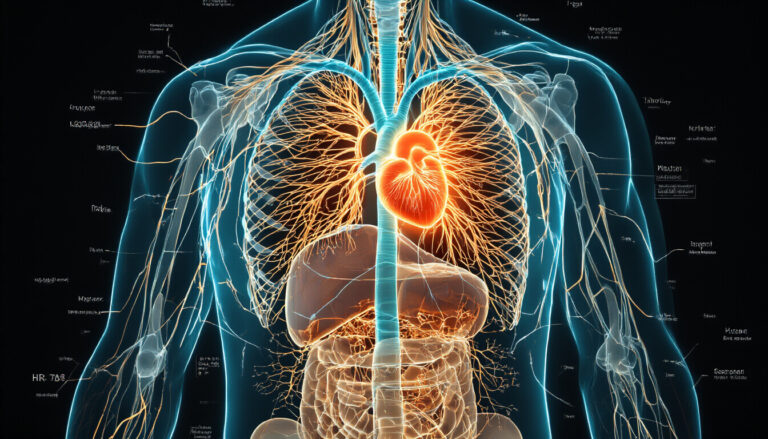
This article is a scientific overview for researchers, clinicians, and product teams. Nothing here is medical advice. Heart rate variability is a measurement, not a diagnosis.
Why HRV Became the Wearable Industry’s Favorite Biomarker
Heart rate variability sits at the center of almost every modern wearable’s “recovery,” “stress,” or “readiness” score. The reason is simple: the time between consecutive heartbeats is one of the few non-invasive windows into the autonomic nervous system that you can actually measure from the wrist or finger, every night, while someone sleeps.1,2
That accessibility cuts both ways. HRV is genuinely useful — three decades of clinical and sports-science literature back that up. But it is also the most over-claimed metric in consumer health technology. Wearable marketing routinely treats HRV as a single number that tells you how stressed, recovered, healthy, or “balanced” you are. The underlying physiology is messier, and the measurement chain has more failure modes than most product copy admits.3,4
This piece is a working researcher’s view of what continuous wearable HRV monitoring can and cannot measure. We cover the autonomic biology, the physics of optical versus electrical measurement, the metrics worth tracking, the evidence base behind device validation, and an honest section on the limits — including the ones that rarely make it into a product launch.
The Autonomic Nervous System in 90 Seconds
Every heartbeat is a negotiation. The sinoatrial node sets a baseline rate around 100–110 bpm in the absence of any neural input — that is the intrinsic firing rate of the pacemaker cells. What brings most adults’ resting heart rate down to 50–70 bpm is parasympathetic outflow through the vagus nerve, which slows the SA node beat by beat.5
Sympathetic and parasympathetic branches of the autonomic nervous system pull in opposite directions, but on very different timescales. Vagal effects act fast — within a single hb_signal — because they work through acetylcholine and a rapidly-deactivating G-protein-coupled potassium channel. Sympathetic effects, mediated by norepinephrine and slower second-messenger cascades, take seconds to minutes to fully express.5,6
This timescale difference matters for HRV interpretation. The fast, beat-to-beat variability that dominates short-term recordings is mostly vagal. The slower oscillations are a mix of sympathetic, parasympathetic, baroreflex, thermoregulatory, and respiratory influences that are difficult to cleanly separate. When a wearable reports “your HRV,” it is overwhelmingly reporting on the parasympathetic side of that ledger — not on overall autonomic state.5,6
The Physics of Measurement: ECG vs PPG
There are two fundamentally different ways consumer wearables capture inter-beat intervals.
Electrocardiography (ECG) measures the electrical depolarization of the heart through skin electrodes. The R-wave of the QRS complex is sharp, has a clear fiducial point, and is what the entire HRV literature was built on. A clinical-grade chest strap (Polar H10, Movesense Medical) samples at 1 kHz or higher and produces R-R interval timing within 1–2 ms of a 12-lead reference under most conditions.7,8
Photoplethysmography (PPG) measures the pulsatile change in blood volume in superficial vessels using one or more LEDs and a photodetector. The wrist-worn devices most people own — Apple Watch, Garmin, Whoop, Oura, Fitbit — use PPG. Instead of an R-R interval, PPG produces a peak-to-peak interval (PP interval) derived from the optical pulse waveform.3,9
PP and R-R intervals are correlated but not identical. The optical pulse arrives at the wrist after a pulse transit delay that varies with vascular tone, blood pressure, and posture. For mean heart rate over a stable resting window, PPG is excellent. For beat-to-beat variability metrics, the gap between PPG and ECG widens as conditions get harder — motion, low perfusion, arrhythmia, dark skin, cold extremities.3,9
RMSSD, SDNN, LF/HF — What Each Metric Actually Measures
The Task Force of the European Society of Cardiology and the North American Society of Pacing and Electrophysiology published the canonical HRV measurement standards in 1996. Three decades later, those definitions still anchor the field.1
RMSSD (root mean square of successive differences) is the standard deviation of the differences between adjacent R-R intervals. It is dominated by short-term, beat-to-beat changes and is the cleanest available proxy for parasympathetic (vagal) tone. It is also the most reproducible metric on wearables, because PPG noise tends to spread across longer-term fluctuations rather than corrupting adjacent beat differences.1,2
SDNN (standard deviation of normal-to-normal intervals) captures total variability over the recording window. Over 24 hours it is a strong all-cause-mortality predictor in cardiac populations. Over five minutes it is mostly noise plus circadian drift. Wearables that report a single nightly SDNN are reporting something closer to RMSSD plus respiratory rhythm than a clinical SDNN.1,2
LF/HF ratio divides spectral power in the low-frequency band (0.04–0.15 Hz) by power in the high-frequency band (0.15–0.4 Hz). It is widely marketed as a “sympathovagal balance” index. It is not. The LF band reflects a tangle of baroreflex, sympathetic, and parasympathetic contributions; the assumption that a higher LF/HF means a more sympathetic state has been refuted by direct pharmacological blockade studies and is no longer defensible as a measure of autonomic balance.10
For a wearable reading a single individual over time, the most defensible metric is RMSSD trended against that person’s own baseline. Cross-sectional comparisons between individuals are confounded by age, sex, fitness, body mass, posture, breathing rate, and dozens of other variables.2,11
The Overnight Window: Why Sleep HRV Is the Most Defensible Reading
Daytime HRV is contaminated by everything: posture, conversation, caffeine, locomotion, mental load, breath-holding, swallowing. Even a five-minute “calm” reading at a desk picks up most of those signals.2,12
Overnight HRV — particularly during slow-wave sleep, when sympathetic outflow is at its daily nadir and respiration is regular — is the cleanest physiological window the autonomic nervous system gives you. It also happens to be when the wearer is least likely to move, which solves most of PPG’s worst signal-quality problems in one stroke.12,13
Plews and colleagues showed in elite athletes that morning RMSSD derived from overnight or first-waking measurements is reproducible week-to-week, sensitive to training load, and predictive of overreaching when it drops below an individual’s rolling baseline.13 This is the methodology nearly every modern wearable (“Whoop recovery,” “Oura readiness,” “Garmin Body Battery”) quietly converged on, even when their marketing language differs.
The practical takeaway: a single five-minute spot reading on a wrist wearable is a noisy snapshot. A trended overnight RMSSD against a 60-day rolling personal baseline is a real signal.
What HRV Can Tell You
Within its limits, trended overnight HRV genuinely reflects several things that matter for clinicians, researchers, and informed users.
Acute stress and recovery. A single hard training session, a poor night of sleep, alcohol the night before, or an acute illness will all suppress next-morning RMSSD relative to baseline. The effect is dose-dependent and reproducible. In athletes, multi-week declines in morning RMSSD precede measurable performance drops by days.13,14
Illness onset. Several large pre-pandemic and during-pandemic datasets showed that fitness wearables could detect physiological perturbations consistent with infection 1–3 days before symptom onset, with HRV change as one of the strongest single signals.15
Cardiac risk in clinical populations. Reduced 24-hour SDNN is one of the strongest non-invasive predictors of mortality after myocardial infarction, independent of left ventricular ejection fraction. This is established cardiology, not wellness extrapolation.16
Training load monitoring. The endurance-sport literature on HRV-guided training is robust. Adjusting training intensity day-to-day based on morning HRV trend produces equal or better fitness gains than fixed periodization, with less overreaching.14
Notice what is on this list. None of it is “stress level today” displayed as a 0–100 score. None of it is a real-time anxiety detector. The defensible uses are trended, longitudinal, and individualized.
What HRV Cannot Tell You
This is the section that almost never makes it into product copy. It should.
HRV is not a stress score. Acute psychological stress can raise or lower HRV depending on the stressor, the person, the timescale, and the breathing pattern at the moment of measurement. The mapping from “I feel stressed” to “my HRV is low” is loose, individual-specific, and weaker than most wellness apps imply.11,17
HRV is not sympathovagal balance. The LF/HF ratio is not a valid measure of sympathetic-to-parasympathetic balance, and no single wearable metric is. Any claim that a number tells you “your nervous system is in fight-or-flight” is overstating what the underlying physiology supports.10
PPG-based HRV degrades with motion, low perfusion, and dark skin. Photoplethysmography depends on detecting the small change in light absorption caused by pulsatile blood flow. Melanin in skin absorbs the green and red wavelengths most PPG sensors use; the same physics that drove documented racial bias in pulse oximetry also affects PPG-derived heart rate and HRV in darker-skinned users.3,18 Recent reviews show the bias is smaller than for SpO₂ but is real and inconsistently disclosed.19
HRV requires a clean signal. Premature beats, atrial fibrillation, ectopic activity, or even normal sinus arrhythmia variability that a device misclassifies will all corrupt the metric. Wearables apply artifact-rejection algorithms that are largely undocumented in the consumer products people actually wear, and the false-rejection rate matters as much as the false-detection rate.3,9
A single number across people is almost meaningless. Resting RMSSD in a healthy 25-year-old endurance athlete might be 120 ms. In a healthy 60-year-old, 25 ms is normal. Comparing your absolute HRV to your friend’s is a category error.2,11
The breathing rate confound. RMSSD is strongly modulated by respiratory rate. Slow, deep breathing during a measurement window will inflate HRV; rapid shallow breathing will suppress it. Spot readings that don’t control for breathing pattern are measuring breathing as much as autonomic state.11
The Validation Evidence Base
Not every device that reports an HRV number has earned the right to. The peer-reviewed validation literature is uneven and worth knowing.
Chest-strap ECG (Polar H7, H10; Movesense Medical). Multiple independent studies have shown agreement within 1–3 ms of clinical 12-lead ECG for R-R intervals during rest and moderate exercise. These are the gold standard for ambulatory HRV outside a clinical Holter monitor.7,8
Smartphone PPG (fingertip, controlled conditions). Plews et al. demonstrated that a smartphone PPG app, used at rest with the user seated and still, produces RMSSD values that agree closely with simultaneous chest-strap ECG. Move the phone, change posture, or measure during ambulation, and agreement drops sharply.9
Wrist-worn PPG. Validation studies are mixed and device-specific. Recent work on Polar Vantage V2 at rest showed acceptable agreement for mean heart rate but wider limits of agreement for RMSSD compared with reference ECG.20 The Bent et al. analysis across multiple consumer wearables found accuracy varied with skin tone, motion state, and BMI in ways manufacturers do not consistently disclose.3
Ring-form PPG (Oura, Ultrahuman). Validation literature is sparse but growing. Ring-form factors benefit from the stable contact a finger provides during sleep, which is when these devices report most of their HRV data — exactly the use case least confounded by motion.
The honest summary: chest-strap ECG is publishable-grade. Wrist and ring PPG are good enough for trended overnight monitoring of an individual against their own baseline, weak for spot readings, and not yet a replacement for clinical-grade measurement in research.
Where the Field Is Heading
Three trajectories are worth watching.
Multi-signal fusion. HRV alone is a noisy single channel. Combined with respiratory rate, skin temperature, movement, and SpO₂ — all of which modern wearables already capture — the joint signal is far more diagnostic than any single metric. Several research groups have shown that early-illness detection improves substantially when HRV is combined with skin temperature trend.15
Longer measurement windows. Spot readings are being replaced by continuous overnight, multi-night, and rolling-baseline approaches. The science supports this; the marketing is catching up.
Individual baselining instead of population norms. The most useful unit of analysis for wearable HRV is the individual against themselves over time, not the individual against a normative database. Both research-grade platforms and consumer apps are increasingly framing their outputs this way.
Better signal-quality transparency. A growing number of platforms expose per-night signal quality scores and let researchers exclude low-quality nights. This is the direction the field needs to keep moving — disclosed uncertainty beats falsely-precise single numbers.
How to Read HRV Claims Responsibly
For researchers, clinicians, and product teams evaluating wearable HRV — whether your own data or a vendor’s claim — a short checklist:
- Ask which metric. RMSSD trended over time is defensible. A composite “stress score” or LF/HF ratio is not.
- Ask about the measurement window. Overnight beats spot. Multi-night beats single-night.
- Ask about the reference. Comparison against the user’s own rolling baseline beats comparison against a population norm.
- Ask for validation. Against what device? In what population? At rest, in motion, across skin tones?
- Ask what was excluded. What signal-quality threshold did the algorithm apply? How many nights are typically dropped?
- Read claims about “balance,” “stress,” or “readiness” skeptically. The underlying physiology rarely supports a single-number summary at the precision marketing implies.
HRV is one of the most useful biomarkers a non-invasive sensor can produce. It is also one of the most over-interpreted. Both of those things are true, and the gap between them is where the next decade of work in wearable physiology will be done.
References
Show references
- Task Force of the European Society of Cardiology and the North American Society of Pacing and Electrophysiology. Heart rate variability: standards of measurement, physiological interpretation, and clinical use. Circulation. 1996;93(5):1043–1065. PMID: 8598068.
- Shaffer F, Ginsberg JP. An overview of heart rate variability metrics and norms. Front Public Health. 2017;5:258. doi: 10.3389/fpubh.2017.00258. PMID: 29034226.
- Bent B, Goldstein BA, Kibbe WA, Dunn JP. Investigating sources of inaccuracy in wearable optical heart rate sensors. NPJ Digit Med. 2020;3:18. doi: 10.1038/s41746-020-0226-6. PMID: 32047863.
- Laborde S, Mosley E, Thayer JF. Heart rate variability and cardiac vagal tone in psychophysiological research — recommendations for experiment planning, data analysis, and data reporting. Front Psychol. 2017;8:213. doi: 10.3389/fpsyg.2017.00213. PMID: 28265249.
- Levy MN. Sympathetic-parasympathetic interactions in the heart. Circ Res. 1971;29(5):437–445. PMID: 4330524.
- Berntson GG, Bigger JT Jr, Eckberg DL, et al. Heart rate variability: origins, methods, and interpretive caveats. Psychophysiology. 1997;34(6):623–648. PMID: 9401419.
- Gilgen-Ammann R, Schweizer T, Wyss T. RR interval signal quality of a heart rate monitor and an ECG Holter at rest and during exercise. Eur J Appl Physiol. 2019;119(7):1525–1532. doi: 10.1007/s00421-019-04142-5. PMID: 31004219.
- Rogers B, Schaffarczyk M, Clauß M, Mourot L, Gronwald T. The Movesense Medical Sensor Chest Belt Device as single channel ECG for RR interval detection and HRV analysis during resting state and incremental exercise: a cross-sectional validation study. Sensors (Basel). 2022;22(5):2032. doi: 10.3390/s22052032. PMID: 35271178.
- Plews DJ, Scott B, Altini M, Wood A, Kilding AE, Laursen PB. Comparison of heart rate variability recording with smart phone photoplethysmographic, Polar H7 chest strap, and electrocardiogram methods. Int J Sports Physiol Perform. 2017;12(10):1324–1328. doi: 10.1123/ijspp.2016-0668. PMID: 28290720.
- Billman GE. The LF/HF ratio does not accurately measure cardiac sympatho-vagal balance. Front Physiol. 2013;4:26. doi: 10.3389/fphys.2013.00026. PMID: 23431279.
- Quintana DS, Heathers JAJ. Considerations in the assessment of heart rate variability in biobehavioral research. Front Psychol. 2014;5:805. doi: 10.3389/fpsyg.2014.00805. PMID: 25101047.
- Trinder J, Kleiman J, Carrington M, et al. Autonomic activity during human sleep as a function of time and sleep stage. J Sleep Res. 2001;10(4):253–264. PMID: 11903855.
- Plews DJ, Laursen PB, Stanley J, Kilding AE, Buchheit M. Training adaptation and heart rate variability in elite endurance athletes: opening the door to effective monitoring. Sports Med. 2013;43(9):773–781. doi: 10.1007/s40279-013-0071-8. PMID: 23852425.
- Buchheit M. Monitoring training status with HR measures: do all roads lead to Rome? Front Physiol. 2014;5:73. doi: 10.3389/fphys.2014.00073. PMID: 24578692.
- Mishra T, Wang M, Metwally AA, et al. Pre-symptomatic detection of COVID-19 from smartwatch data. Nat Biomed Eng. 2020;4(12):1208–1220. doi: 10.1038/s41551-020-00640-6. PMID: 33208926.
- Kleiger RE, Miller JP, Bigger JT Jr, Moss AJ. Decreased heart rate variability and its association with increased mortality after acute myocardial infarction. Am J Cardiol. 1987;59(4):256–262. PMID: 3812275.
- Kim HG, Cheon EJ, Bai DS, Lee YH, Koo BH. Stress and heart rate variability: a meta-analysis and review of the literature. Psychiatry Investig. 2018;15(3):235–245. doi: 10.30773/pi.2017.08.17. PMID: 29486547.
- Sjoding MW, Dickson RP, Iwashyna TJ, Gay SE, Valley TS. Racial bias in pulse oximetry measurement. N Engl J Med. 2020;383(25):2477–2478. doi: 10.1056/NEJMc2029240. PMID: 33326721.
- Colvonen PJ, DeYoung PN, Bosompra NA, Owens RL. Limiting racial disparities and bias for wearable devices in health science research. Sleep. 2020;43(10):zsaa159. doi: 10.1093/sleep/zsaa159. PMID: 32893865.
- Nuuttila OP, Korhonen E, Laukkanen J, Kyröläinen H. Validity of the wrist-worn Polar Vantage V2 to measure heart rate and heart rate variability at rest. Sensors (Basel). 2022;22(1):137. doi: 10.3390/s22010137. PMID: 35009680.
References
References
- Task Force of the European Society of Cardiology and the North American Society of Pacing and Electrophysiology. Heart rate variability: standards of measurement, physiological interpretation, and clinical use. Circulation. 1996;93(5):1043-1065.
- Thayer JF, Lane RD. A model of neurovisceral integration in emotion regulation and dysregulation. Journal of Affective Disorders. 2000;61(3):201-216.
- Shaffer F, Ginsberg JP. An overview of heart rate variability metrics and norms. Frontiers in Public Health. 2017;5:258.
- Laborde S, Mosley E, Thayer JF. Heart rate variability and cardiac vagal tone in psychophysiological research. Frontiers in Psychology. 2017;8:213.
- Allen J. Photoplethysmography and its application in clinical physiological measurement. Physiological Measurement. 2007;28(3):R1-R39.
- Dobbs WC, Fedewa MV, MacDonald HV, et al. The accuracy of acquiring heart rate variability from portable devices: a systematic review and meta-analysis. Sports Medicine. 2019;49:417-435.