
Sensor Bio
vs Garmin
One is signal infrastructure, built to carry raw physiological data into any system that needs it. The other is a consumer GPS health watch, built to carry Body Battery, training, and Connect scores onto a wrist. Here is the difference, specification by specification.
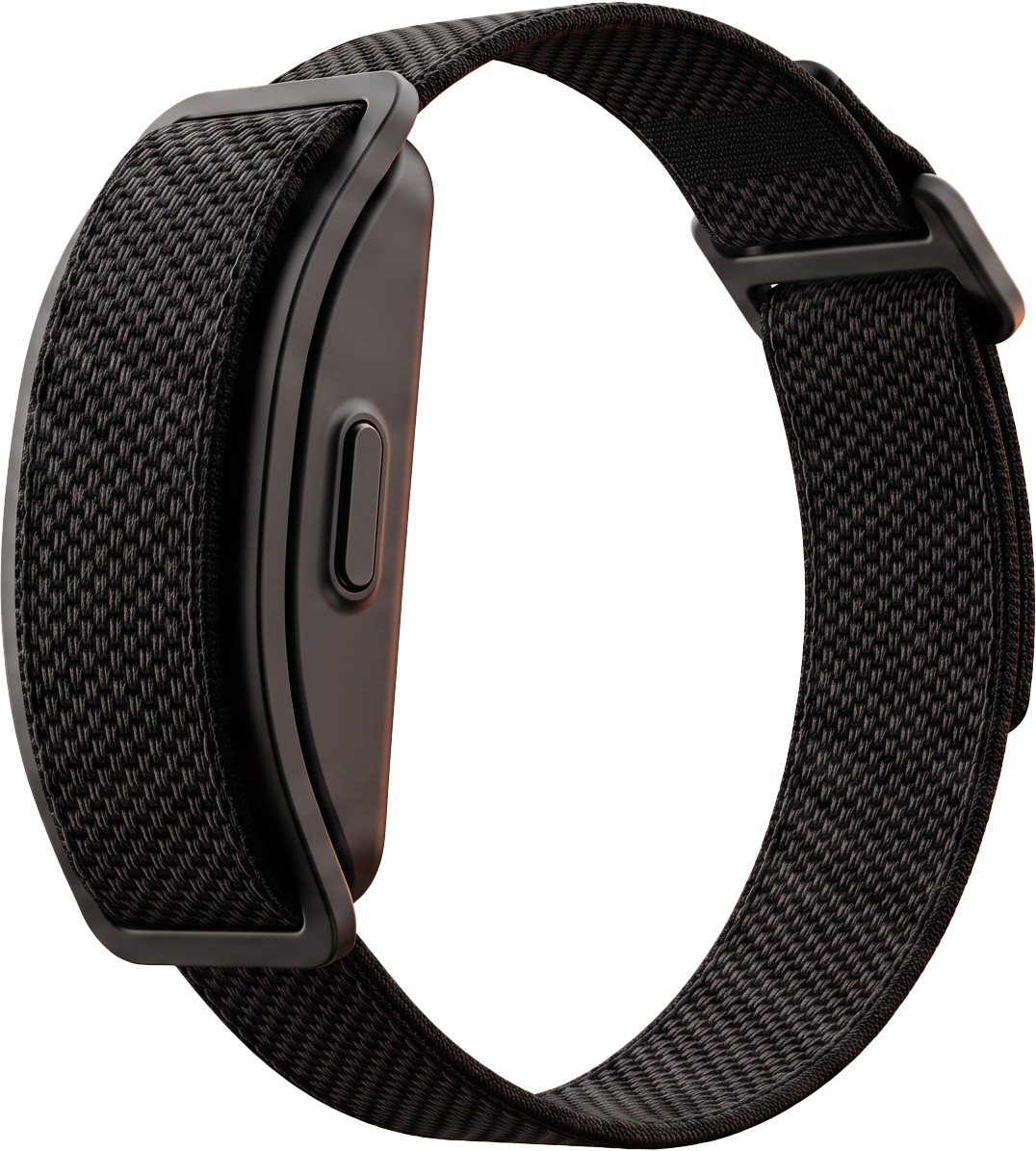
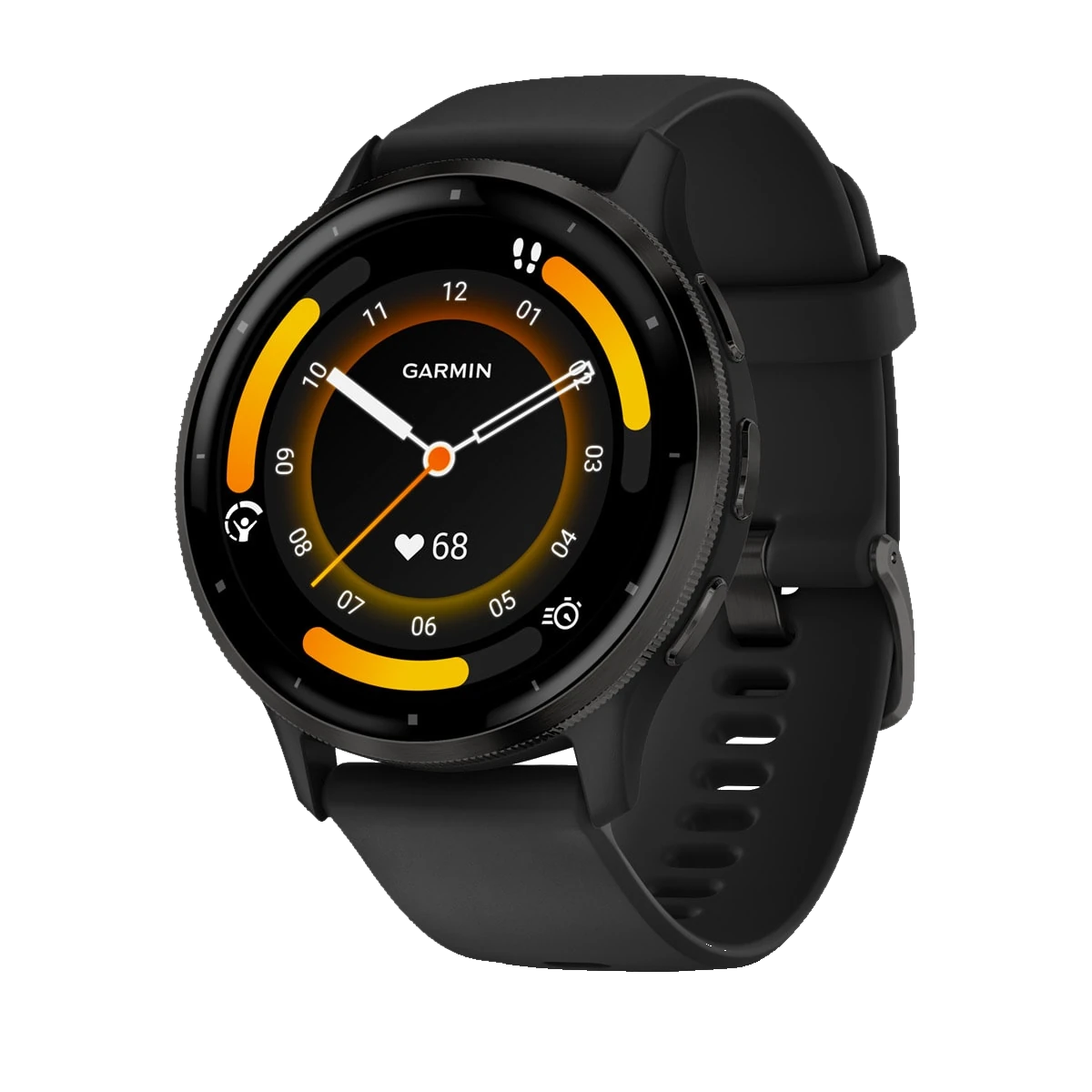
Built as infrastructure, not as a gadget.
Four differences decide whether a wearable can carry an institutional workload. Garmin's public stack is a consumer watch plus Connect, Connect IQ, and a gated Health API — not partner-owned raw signal infrastructure.
The full waveform, not the summary
Scores and insights sit on top of the exposed raw signal, with the context that shows what drove the number.
Health API hands over JSON summaries from Garmin Connect. Enhanced beat-to-beat is listed for Enterprise Access. Continuous raw PPG is not listed on that surface as of 2026-10-28.
One system, every use case
Designed from the ground up as a data platform that clinical, defense, and enterprise partners build on directly.
A consumer GPS health watch plus Garmin Connect. Partners inherit Connect, Connect IQ watch apps, or a gated Health API / Health SDK license.
Your brand on the signal
Ships as infrastructure a partner can put its own name on from the first deployment.
Health Standard SDK can skip Garmin servers and land in your app. The watch still says Garmin. A white-label / OEM hardware path is not listed as of 2026-10-28.
Shaped to the deployment
Data model, retention, and reporting are configured to the partner's environment: a hospital, a base, a research protocol.
Configured per Connect user and Garmin Health program license. Partner-shaped capture, retention, and reporting for a hospital, base, or protocol are not listed as a self-serve default as of 2026-10-28.
A wellness tracker tells a person a score and stops there. A signal platform shows the score, the raw signal behind it, and hands over the data to prove it.
Six problems institutional buyers run into, and how we answer each one.
Raw waveform export is the default data product for every partner, not a gated upsell.
The public Health API documents JSON summaries after a device syncs to Garmin Connect. Enhanced beat-to-beat interval is listed for Enterprise Access only. Continuous raw PPG / multi-wavelength waveforms are not listed on Health API, Health SDK, or Connect IQ pages as of 2026-10-28. That is not the same as “Garmin has no developer surface.”
Deployments are configured to retain the history a partner actually needs.
Starter Access on the Garmin Connect Developer Program lists historical data as not included. Enterprise Access lists “1 month +”. A partner-configurable multi-year waveform retention window is not listed on those public program pages as of 2026-10-28.
Every score ships next to the raw signal it was built from, plus the context for what drove it.
Body Battery, stress, sleep score, and HRV status are the consumer product. The Health API returns those summaries (and related epoch / activity JSON) without the raw PPG they were built from, as of 2026-10-28.
Partners build directly on the Sensor Bio platform, built as infrastructure from the start.
Partners build on Garmin Connect (Health API / Companion SDK) or apply for a licensed Health Standard SDK that keeps data off Garmin servers. Connect IQ builds watch-face and data-field apps on the device. None of those public pages list a partner-owned raw PPG platform as of 2026-10-28.
Native white-label from the first deployment. The partner's brand carries the platform end to end.
The watch is Garmin-branded. Companion SDK stays compatible with Garmin Connect. Standard SDK can create a single-app experience without Garmin servers, after a license conversation. A white-label or OEM hardware path is not listed on public Health SDK or garmin.com product pages as of 2026-10-28.
Configured per deployment from day one: a hospital, a base, or a research protocol.
Built for athletes and everyday users who want GPS training, Body Battery, and Connect. Institutional raw capture, white-label, and waveform-level control are a gated retrofit — not the default product.
Everything the Sensor Bio SDK hands you on day one.
Eight categories of physiological data, fetchable per day or across a range, with the raw datapoint series underneath every summary. No separate license. No gated tier.
Continuous core signals
Heart rate, daily and trending, with a Poincaré plot. Heart rate variability across the same daily and range views.
Respiratory rate, daily and trending.
Skin temperature: min, max, average, and the full point series.
Movement and energy
Steps graphed over time, and calories.
Daily activity score with baseline difference and progress percentage.
See how much you move with a daily running total of movement duration.
Readiness, daily and ranged
Daily recovery score compared across weeks, months and years.
Scores are personal to you and after calibration, reflect your physiological changes.
Use the underlying biometrics or the aggregate score for easy reference.
The deepest surface in the SDK
Sleep score with running average, contributing factors, and penalties. Awake, REM, light, and deep percentages, plus minute-by-minute stage intervals across the night.
Resting HR and HRV, plus full HR, HRV, and respiratory-rate graphs with every datapoint. Skin temperature with min, max, average, uncertainty, and baseline comparison.
Total sleep time, onset and wake timestamps, and per-session timing including naps.
Recommended bedtime, wake time, and duration. Circadian score and net sleep debt with three-night accounting. Range views add score trends, daily sleep-time points, and an aggregated debt graph.
On-demand snapshot
HRV against baseline, and parasympathetic to sympathetic balance.
Min, max, and average HR with a graph, plus respiratory rate and stress index.
Signal-to-noise ratio on the reading, and a PDF report link.
Session-level biometrics
Per-workout average, min, and max heart rate.
Time-in-zone breakdown for the session.
Summary, detail, and timeline endpoints per workout.
Cloud-synced attributes
VO₂ max, max HR, and computed max HR.
Height, weight, and walk / run stride.
Biometrics, sleep, and steps across a date range in one call.
Raw signal, in real time
During an active recording session the band streams HR, HRV, respiratory rate, beat-to-beat intervals, raw PPG, signal-to-noise ratio, and motion.
This is the ground-truth channel a wellness tracker never exposes. Everything above is derived from it.
Compiled from the public SensorBio SDK interface, v0.17.0. Categories one through seven are fetched from the cloud after sync, per day or across a date range, with cached and force-remote variants. Sensor Bio V2 is a general wellness device: not FDA-cleared, not FDA-approved, not intended for diagnostic use.
What Garmin actually exposes to developers — three different doors.
Connect IQ is not the Health API, and the Health API is not the Health SDK. Institutional raw PPG is not listed on any of those public pages as of 2026-10-28. “Not listed” is not the same as “doesn’t have.”
On-device SDK for watch faces, data fields, widgets, and device apps. Latest public SDK listed as Connect IQ 9.3.0, updated 2026-10-19. Sensor APIs include HeartRateData.heartBeatIntervals (millisecond IBI arrays) on supported devices. Raw PPG / BVP is not listed on the Connect IQ docs as of 2026-10-28.
Garmin Connect Developer Program REST API. JSON summaries of data uploaded to Connect after user consent: steps, intensity minutes, sleep, calories, heart rate, stress, Pulse Ox, Body Battery, body composition, respiration, blood pressure, and epoch summaries. Starter Access is push-only with historical data not included. Enterprise Access adds ping/pull, “1 month +” history, and Enhanced Beat-To-Beat Interval. Approval required. As of 2026-10-28, developer.garmin.com/gc-developer-program/.
Gated enterprise SDKs. Request access; evaluation is listed as free, commercial use as a license fee or minimum device order. Standard SDK: single-app control without Garmin servers, HIPAA-compliant archive in your systems. Companion SDK: real-time streams while staying compatible with Connect. Both list accelerometer, heart rate, Pulse Ox, respiration, stress, and Enhanced Beat-To-Beat Intervals. Standard also lists customizable logging for gyroscope and actigraphy. Raw PPG is not listed. As of 2026-10-28, developer.garmin.com/health-sdk/.
Garmin Connect app is the default consumer cloud. Venu 3 pairs with it for Body Battery, sleep coaching, HRV status, Health Snapshot, and training. That is the score-on-screen product, not a white-label platform.
Continuous raw PPG / multi-wavelength waveforms are not listed on the public Health API, Health SDK, or Connect IQ pages as of 2026-10-28. Enhanced BBI is listed (Enterprise Health API; Health SDK streams / logging). White-label or OEM hardware is not listed. Confirm current license terms with Garmin — public pages move.
How the two platforms actually compare.
| Specification |
Platform
 |
Platform
GARMIN
Venu 3 (45 mm)
|
|---|---|---|
| Hardware | ||
| Band material | Matte black woven nylon diamond-weave, low-profile curved module | Silicone strap; 22 mm industry-standard Quick Release. As of 2026-10-28, garmin.com Venu 3 specs (regional product pages). |
| Case material | Plastic and polycarbonate sensor housing with TiN electrodes | Fiber-reinforced polymer case, stainless-steel bezel, Corning Gorilla Glass 3 lens. As of 2026-10-28, garmin.com Venu 3 specs. |
| Sensor hardware | Multi-wavelength raw PPG with three-axis accelerometer and temperature |
Garmin Elevate wrist HR (constant, every second), Pulse Ox, barometric altimeter, compass, gyroscope, accelerometer, ambient light, GPS / GLONASS / Galileo. PPG wavelength count is not listed (as of 2026-10-28). Spec-sheet thermometer row requires a tempe accessory; sleep skin-temperature trend is listed as a product feature. |
| Continuous wear and battery | 3-4 days of continuous PPG capture |
Up to 14 days smartwatch mode (5 days always-on display); up to 26 days Battery Saver. GPS-only up to 26 hours; all-systems GNSS up to 20 hours; GNSS with music up to 11 hours. Garmin proprietary plug charger. As of 2026-10-28, garmin.com Venu 3 specs. |
| Water resistance | IP68, water-resistant to 1.5 m for 30 minutes |
5 ATM (withstands pressure equivalent to 50 m). As of 2026-10-28, garmin.com Venu 3 specs and owner's manual. |
| Weight and fit | About 1 oz, one size, adjustable, all-day wear | 45 × 45 × 12 mm; 30 g without band, 47 g with included band. Fits wrists 135–200 mm. 1.4″ AMOLED, 454 × 454. As of 2026-10-28, garmin.com Venu 3 specs. |
| Operating temperature | −40°C to +85°C | −20°C to +50°C operating; 0°C to +45°C charging. As of 2026-10-28, Venu 3 series owner's manual. |
| Sync | Bluetooth Low Energy 5.0, one-touch pairing, no PIN required | Bluetooth, ANT+, and Wi-Fi. Pairs with Garmin Connect on iPhone and Android. As of 2026-10-28, garmin.com Venu 3 specs. |
| Platform | ||
| Design philosophy | Signal-first screenless band. Scores sit on top of exposed raw signal, not in place of it | AMOLED GPS health watch that feeds Body Battery, training, and sleep coaching in Garmin Connect |
| Backend model | Built as infrastructure. Every partner builds directly on the platform | Garmin Connect cloud by default. Public doors: Connect IQ (on-device apps), Health API (Connect JSON after approval), Health SDK (licensed Standard / Companion) |
| White-label and OEM | Native white-label, partner brand from the first deployment | Health Standard SDK can skip Garmin servers and land in your app. White-label / OEM hardware is not listed on public Health SDK or garmin.com pages as of 2026-10-28 |
| Customization | Configured per deployment: clinical, defense, or research |
Configured per Connect user, Connect IQ app, and Garmin Health program license. Health SDK lists “configure device features to meet your program requirements” after approval, as of 2026-10-28 |
| Primary market | B2B enterprise solutions | Individual athletes and everyday users in the Garmin Connect ecosystem; Health API / SDK for approved corporate wellness, population health, and patient-monitoring programs |
| Data | ||
| Raw signal access | Raw waveform export is the default data product |
Continuous raw PPG / multi-wavelength waveforms are not listed on public Health API, Health SDK, or Connect IQ pages as of 2026-10-28. Enhanced beat-to-beat interval is listed for Enterprise Health API and Health SDK streams / logging. Connect IQ exposes heartBeatIntervals on supported devices. |
| Scores and insights | Activity, recovery, and sleep scores, always paired with the raw signal behind them |
Body Battery, sleep score, HRV status, all-day stress, Health Snapshot on the consumer watch. Health API lists JSON summaries for those metrics (and second-level HR during activities) as of 2026-10-28 |
| On-device storage | Local buffer pending BLE sync |
8 GB on-watch memory / history listed on Venu 3 specs as of 2026-10-28. Partner-configurable raw-signal buffer is not listed |
| Cloud and history | Sensor Bio cloud platform, with raw data export to partners | Health API: Starter Access lists historical data as not included; Enterprise Access lists “1 month +” and backfill tools. As of 2026-10-28, Garmin Connect Developer Program overview |
| Reporting and clinician share | Customizable RPM dashboard with raw and derived export |
Garmin Connect coaching views. Health Snapshot generates a 2-minute report to share. Health API is positioned for corporate wellness, population health, and patient monitoring after approval, as of 2026-10-28 |
| Biometrics | ||
| Heart rate | Continuous raw PPG |
Wrist HR constant, every second, on Venu 3. Health API lists heart rate JSON and “second-level HR during activities.” Raw PPG waveform export is not listed as of 2026-10-28 |
| Heart rate variability | Captured whenever enough IBIs are valid: good signal quality, low motion |
HRV status from overnight wrist HR on Venu 3. Enhanced Beat-To-Beat Interval is listed for Enterprise Health API and Health SDK. Connect IQ lists heartBeatIntervals on supported devices. As of 2026-10-28 |
| Respiratory rate | Derived from raw IBI |
Respiration rate 24×7 on Venu 3. Health API and Health SDK list respiration among available metrics as of 2026-10-28 |
| Activity tracking | Raw accelerometer and gyroscope |
Steps, intensity minutes, calories, floors, GPS activities, and 30+ sports apps on Venu 3. Health API lists steps, intensity minutes, calories, and epoch summaries as of 2026-10-28. Raw accelerometer / gyroscope export is listed on Health SDK logging, not as a public self-serve default |
| Sleep tracking | Continuous multi-sensor sleep detection |
Advanced sleep, sleep score and insights, sleep coach, nap detection, HRV status, breathing variations on Venu 3. Health API lists sleep; Health SDK lists sleep and advanced sleep data as of 2026-10-28 |
| Temperature tracking | Continuous skin temperature, 24/7 at per-minute resolution |
Sleep skin-temperature trend listed on the Venu 3 product page. Spec-sheet thermometer row requires a tempe accessory. Continuous exportable series is not listed on the public Health API page as of 2026-10-28 |
| ECG | Single-lead ECG capability, coming soon |
Garmin ECG app on Venu 3: single-lead-style recording for AFib signs; not available in every region; not intended for people under 22. Garmin states Pulse Ox is not a medical device. ECG export is not listed on the public Health API page as of 2026-10-28 |
| Heart rate recovery | Available from raw data | Workout benefit and recovery time listed on the Venu 3 product page. A public Health API resource named “heart rate recovery” is not listed as of 2026-10-28 |
| Stress and autonomic balance | Parasympathetic and sympathetic balance plus stress index, available on spot check | All-day stress, Body Battery, meditation, and breathwork on Venu 3. Health API and Health SDK list stress (and Companion lists live stress scores) as of 2026-10-28 |
| Cadence and gait | Yes, via raw data export | On-watch running cadence and running dynamics listed on Venu 3. Raw gait export via the public Health API page is not listed as of 2026-10-28 |
| Alerts and notifications | Custom triggers, alerts, and notifications on any metric | Abnormal heart-rate alerts (high/low), incident detection, and assistance on Venu 3. Partner-defined metric triggers on any raw channel are not listed as of 2026-10-28 |
Sensor Bio figures are sourced from the Sensor Bio V2 technical specification sheet, current as of July 2026. Sensor Bio V2 is a general wellness device: not FDA-cleared, not FDA-approved, not intended for diagnostic use. It is not intended for diagnostic use and does not imply RPM billing eligibility. Garmin hardware figures (garmin.com Venu 3 product pages and owner's manual) and developer figures (Connect Developer Program, Health API, Health SDK, Connect IQ) are current as of 2026-10-28. “Not listed” means the fact was not found on that public surface — not that the capability does not exist.
Athletes already in Garmin Connect
Choose Garmin when users already wear a Garmin watch for GPS training, Body Battery, and Connect — and when approved Health API summaries or a licensed Health SDK stream are enough for the integration.
Builders who need the signal
Choose Sensor Bio for research, clinical-ops-adjacent programs, defense and enterprise, and product teams that need raw multi-wavelength PPG, IBI, live stream, white-label, and deployment-configured retention as infrastructure.
See what a signal platform does that a wellness app cannot.
Better signal leads to better insights — and better health.