
Sensor Bio
vs Polar 360
One is signal infrastructure, built to carry raw physiological data into any system that needs it. The other is a wellness tracker, built to carry a score onto a screen. Here is the difference, specification by specification.
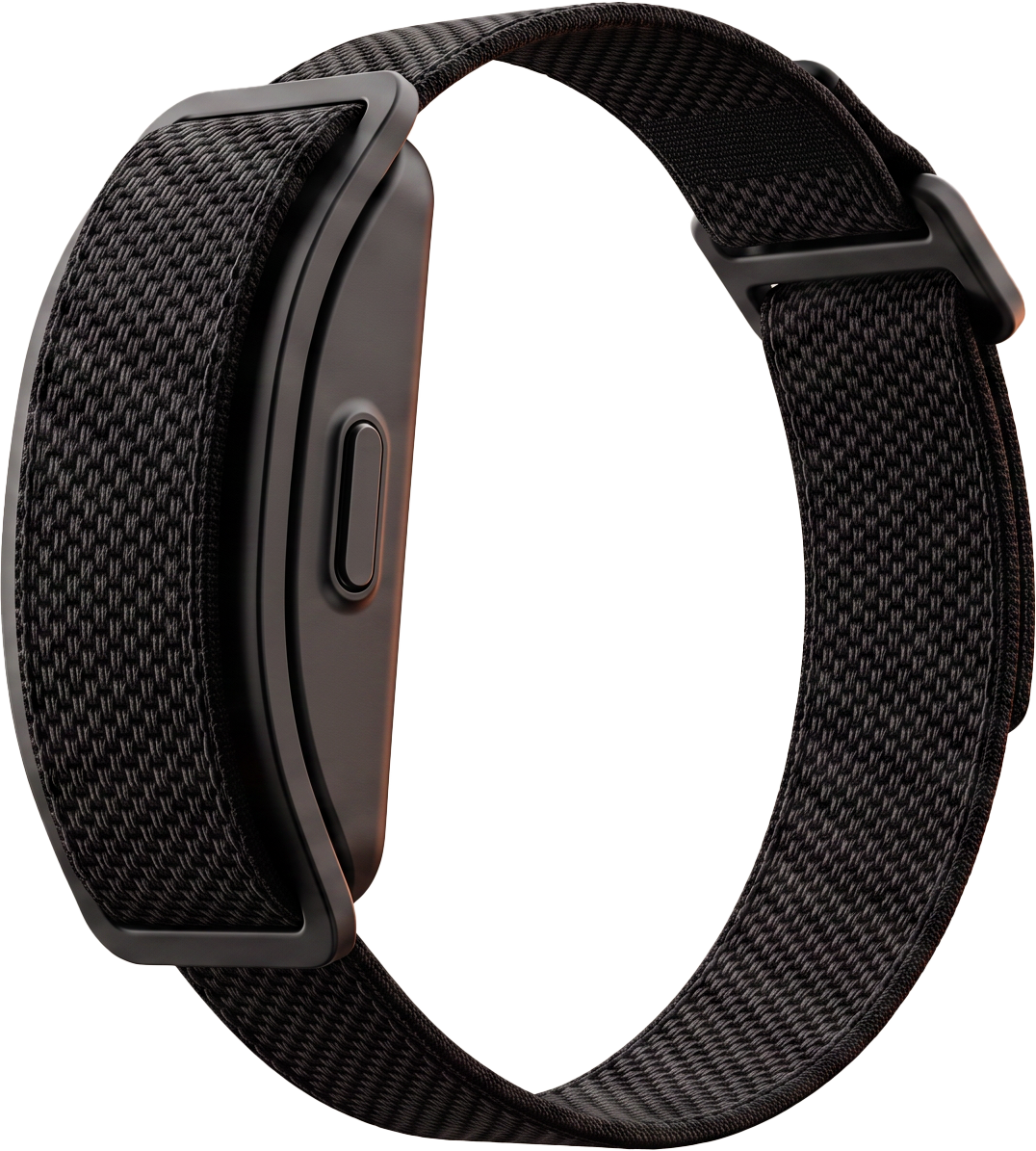
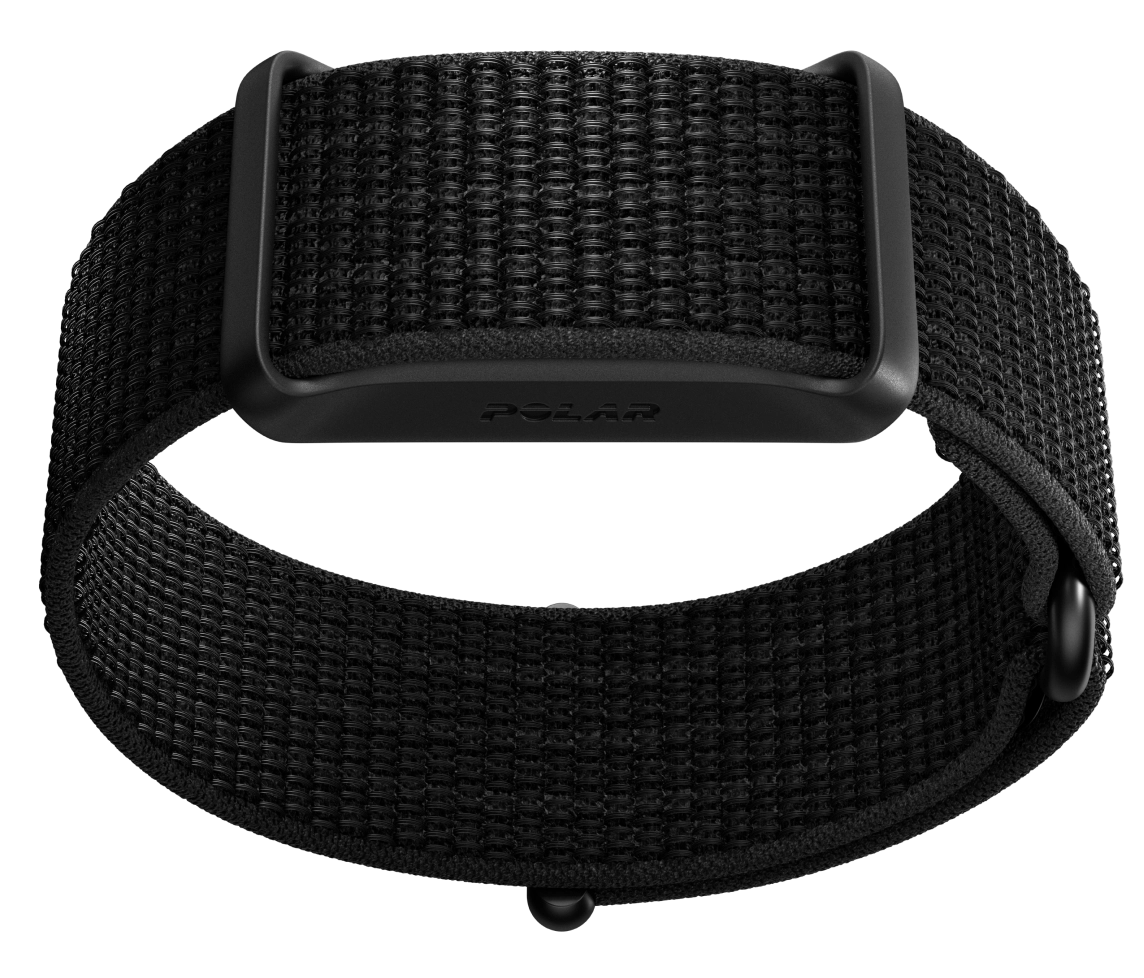
Built as infrastructure, not as a gadget.
Four differences decide whether a wearable can carry an institutional workload. Polar 360 was not built for any of them.
The full waveform, not the summary
Scores and insights sit on top of the exposed raw signal, with the context that shows what drove the number.
A black box. Data arrives only as a summary.
One system, every use case
Designed from the ground up as a data platform that clinical, defense, and enterprise partners build on directly.
No customization for institutional workflows.
Your brand on the signal
Ships as infrastructure a partner can put its own name on from the first deployment.
Not available. The branding stays theirs.
Shaped to the deployment
Data model, retention, and reporting are configured to the partner's environment: a hospital, a base, a research protocol.
Configured for the individual, not the deployment.
A wellness tracker tells a person a score and stops there. A signal platform shows the score, the raw signal behind it, and hands over the data to prove it.
Six problems institutional buyers run into, and how we answer each one.
Raw waveform export is the default data product for every partner, not a gated upsell.
Raw PPG and accelerometer data sit behind a separate B2B SDK license. The consumer path never sees it.
Deployments are configured to retain the history a partner actually needs.
The API returns only the most recent 90 days, with no backfill for anything older.
Every score ships next to the raw signal it was built from, plus the context for what drove it.
Recovery and training-load scores come from proprietary algorithms, with no raw signal exposed alongside them to check the math.
Partners build directly on the Sensor Bio platform, built as infrastructure from the start.
Partners build on Polar Flow, a consumer wellness cloud, and inherit its roadmap and its constraints.
Native white-label from the first deployment. The partner's brand carries the platform end to end.
OEM licensing exists, but Polar's algorithms and platform identity remain underneath the partner's skin.
Configured per deployment from day one: a hospital, a base, or a research protocol.
Built and configured for the individual consumer, which makes clinical, defense, and enterprise workflows a retrofit.
Everything the Sensor Bio SDK hands you on day one.
Eight categories of physiological data, fetchable per day or across a range, with the raw datapoint series underneath every summary. No separate license. No gated tier.
Continuous core signals
Heart rate, daily and trending, with a Poincaré plot. Heart rate variability across the same daily and range views.
Respiratory rate, daily and trending.
Skin temperature: min, max, average, and the full point series.
Movement and energy
Steps graphed over time, and calories.
Daily activity score with baseline difference and progress percentage.
See how much you move with a daily running total of movement duration.
Readiness, daily and ranged
Daily recovery score compared across weeks, months and years.
Scores are personal to you and after calibration, reflect your physiological changes.
Use the underlying biometrics or the aggregate score for easy reference.
The deepest surface in the SDK
Sleep score with running average, contributing factors, and penalties. Awake, REM, light, and deep percentages, plus minute-by-minute stage intervals across the night.
Resting HR and HRV, plus full HR, HRV, and respiratory-rate graphs with every datapoint. Skin temperature with min, max, average, uncertainty, and baseline comparison.
Total sleep time, onset and wake timestamps, and per-session timing including naps.
Recommended bedtime, wake time, and duration. Circadian score and net sleep debt with three-night accounting. Range views add score trends, daily sleep-time points, and an aggregated debt graph.
On-demand snapshot
HRV against baseline, and parasympathetic to sympathetic balance.
Min, max, and average HR with a graph, plus respiratory rate and stress index.
Signal-to-noise ratio on the reading, and a PDF report link.
Session-level biometrics
Per-workout average, min, and max heart rate.
Time-in-zone breakdown for the session.
Summary, detail, and timeline endpoints per workout.
Cloud-synced attributes
VO₂ max, max HR, and computed max HR.
Height, weight, and walk / run stride.
Biometrics, sleep, and steps across a date range in one call.
Raw signal, in real time
During an active recording session the band streams HR, HRV, respiratory rate, beat-to-beat intervals, raw PPG, signal-to-noise ratio, and motion.
This is the ground-truth channel a wellness tracker never exposes. Everything above is derived from it.
Compiled from the public SensorBio SDK interface, v0.17.0. Categories one through seven are fetched from the cloud after sync, per day or across a date range, with cached and force-remote variants. Sensor Bio V2 is a general wellness device: not FDA-cleared, not FDA-approved, not intended for diagnostic use.
How the two platforms actually compare.
| Specification |
Platform
 |
Platform
 |
|---|---|---|
| Hardware | ||
| Band material | Matte black woven nylon diamond-weave, low-profile curved module | Silicone and fabric wristband, standard fitness-tracker construction |
| Case material | Plastic and polycarbonate sensor housing with TiN electrodes | Polymer consumer case |
| Sensor hardware | Multi-wavelength raw PPG with three-axis accelerometer and temperature |
Precision Prime optical HR, single generation, with accelerometer |
| Continuous wear and battery | 3-4 days of continuous PPG capture |
Up to 5 days per charge |
| Water resistance | IP68, water-resistant to 1.5 m for 30 minutes |
30 meters (WR30), suitable for swimming and bathing |
| Weight and fit | About 1 oz, one size, adjustable, all-day wear | About 17 g (0.6 oz). Fixed band sizing, textile and silicone strap |
| Operating temperature | −40°C to +85°C | −10°C to +50°C |
| Sync | Bluetooth Low Energy 5.0, one-touch pairing, no PIN required | Bluetooth sync with the Polar Flow app |
| Platform | ||
| Design philosophy | Signal-first screenless band. Scores sit on top of exposed raw signal, not in place of it | Screenless activity band that feeds Polar's scored consumer app |
| Backend model | Built as infrastructure. Every partner builds directly on the platform | Polar Flow, a consumer wellness cloud extended to partners |
| White-label and OEM | Native white-label, partner brand from the first deployment | OEM licensing on select hardware, with Polar branding and algorithms underneath |
| Customization | Configured per deployment: clinical, defense, or research |
Configured per individual consumer account |
| Primary market | B2B enterprise solutions | Individual consumers, with a secondary B2B licensing track |
| Data | ||
| Raw signal access | Raw waveform export is the default data product |
Raw PPG and accelerometer available, but only through a separate B2B SDK license |
| Scores and insights | Activity, recovery, and sleep scores, always paired with the raw signal behind them |
Recovery, sleep, and training-load scores as the primary output, with no raw signal exposed alongside them |
| On-device storage | Local buffer pending BLE sync |
On-device buffer between syncs to the Polar Flow app |
| Cloud and history | Sensor Bio cloud platform, with raw data export to partners | API access limited to the most recent 90 days, with no historical backfill |
| Reporting and clinician share | Customizable RPM dashboard with raw and derived export |
Fixed consumer app views and shareable activity summaries |
| Biometrics | ||
| Heart rate | Continuous raw PPG |
Continuous optical HR, delivered as summarized values |
| Heart rate variability | Captured whenever enough IBIs are valid: good signal quality, low motion |
Nightly HRV through Nightly Recharge, with no raw IBI on the consumer path |
| Respiratory rate | Derived from raw IBI |
Nightly breathing rate |
| Activity tracking | Raw accelerometer and gyroscope |
Steps, calories, and activity goal from the accelerometer |
| Sleep tracking | Continuous multi-sensor sleep detection |
Sleep stages and Sleep Score through Sleep Plus Stages |
| Temperature tracking | Continuous skin temperature, 24/7 at per-minute resolution |
Nightly skin temperature deviation |
| ECG | Single-lead ECG capability, coming soon |
Not available |
| Heart rate recovery | Available from raw data | Not surfaced |
| Stress and autonomic balance | Parasympathetic and sympathetic balance plus stress index, available on spot check | Nightly Recharge autonomic status |
| Cadence and gait | Yes, via raw data export | Not available |
| Alerts and notifications | Custom triggers, alerts, and notifications on any metric | Fixed consumer notifications |
Sensor Bio figures are sourced from the Sensor Bio V2 technical specification sheet, current as of July 2026. Sensor Bio V2 is a general wellness device: not FDA-cleared, not FDA-approved, not intended for diagnostic use. Polar figures are sourced from Polar's published technical documentation and public reporting, current as of July 2026.
See what a signal platform does that a wellness app cannot.
Better signal leads to better insights — and better health.