
Sensor Bio
vs Hume
One is signal infrastructure, built to carry raw physiological data into any system that needs it. The other is a longevity band and body-composition ecosystem, built to carry Metabolic Capacity, biological age, and AI coaching into the Hume app and a business dashboard. Here is the difference, specification by specification.
Updated October 28, 2026
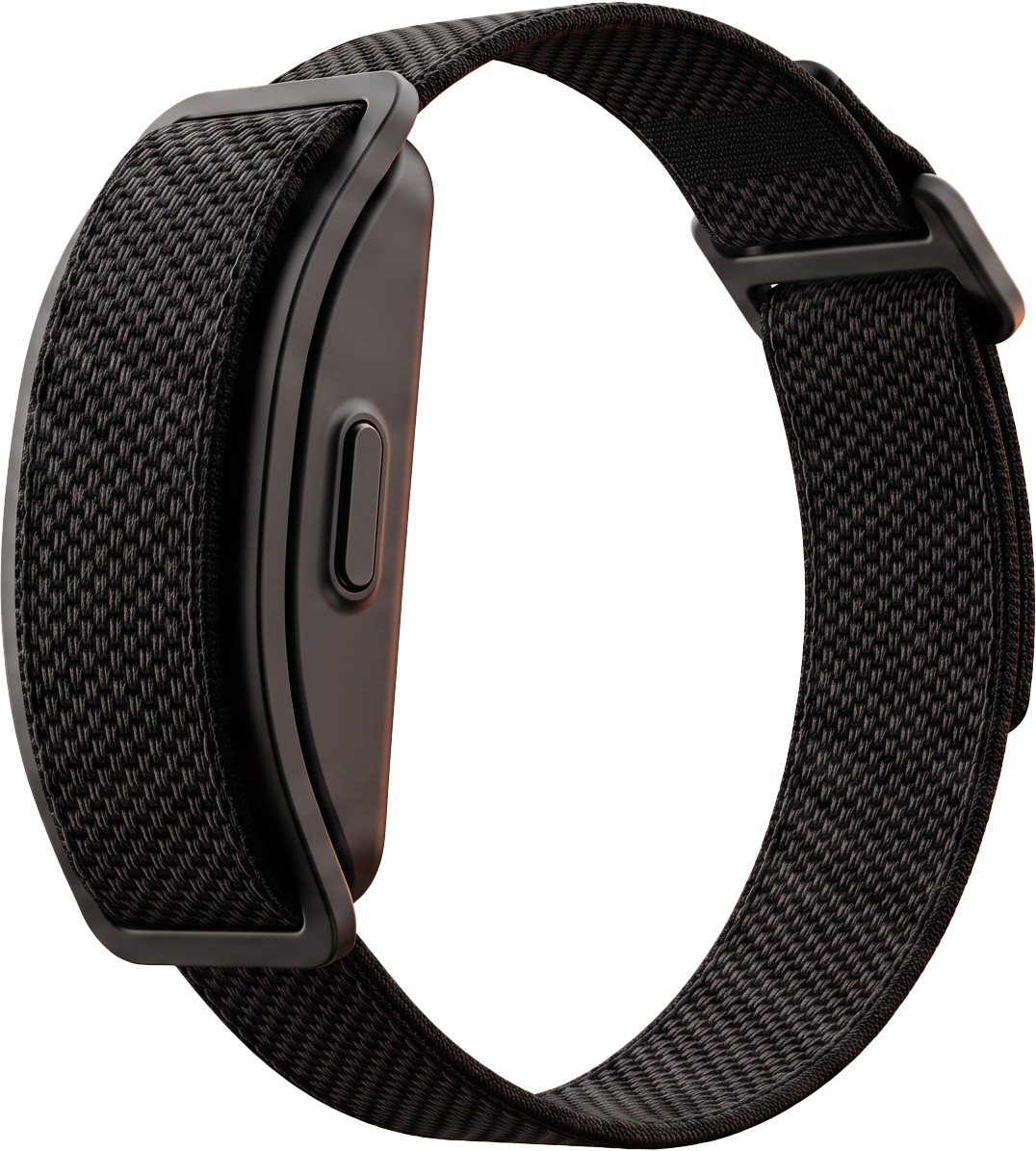
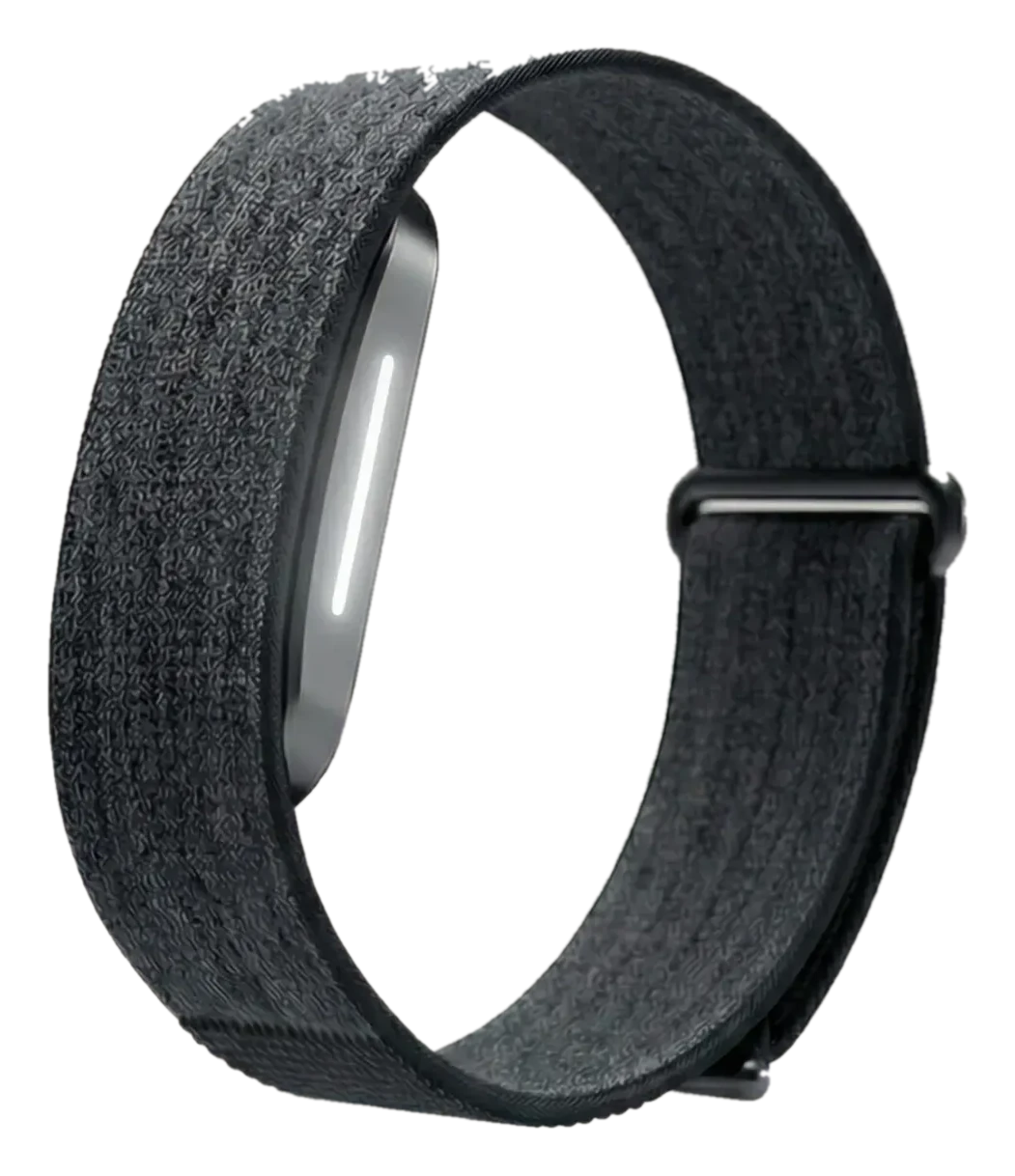
Built as infrastructure, not as a gadget.
Four differences decide whether a wearable can carry an institutional workload. Hume Band 2.0 was built as a consumer longevity band with a business sales channel, not as partner signal infrastructure.
The full waveform, not the summary
Scores and insights sit on top of the exposed raw signal, with the context that shows what drove the number.
Derived metrics and AI scores in the Hume app. Raw PPG waveforms and IBI export are not listed publicly.
One system, every use case
Designed from the ground up as a data platform that clinical, defense, and enterprise partners build on directly.
A consumer longevity app plus the Hume Connect business dashboard, centred on Hume Pod scans. Partners inherit that product surface.
Your brand on the signal
Ships as infrastructure a partner can put its own name on from the first deployment.
The reseller program offers co-branded collateral. White-label / OEM is not listed. The brand stays Hume’s.
Shaped to the deployment
Data model, retention, and reporting are configured to the partner's environment: a hospital, a base, a research protocol.
Programs are provisioned as rosters in Hume Connect, not configured per protocol at the signal level.
A wellness tracker tells a person a score and stops there. A signal platform shows the score, the raw signal behind it, and hands over the data to prove it.
Six problems institutional buyers run into, and how we answer each one.
Raw waveform export is the default data product for every partner, not a gated upsell.
Hume’s Band FAQ says no subscription is needed to “access your raw data,” but the items it lists are derived metrics: heart rate, HRV, SpO2, respiratory rate, sleep stages, strain, and skin temperature. A public developer API, SDK, or raw PPG waveform export is not listed on humehealth.com or humehealthbusiness.com.
Deployments are configured to retain the history a partner actually needs.
The band stores up to 7 days locally when it cannot sync. Hume Connect shows longitudinal trends; a partner-configurable retention window and bulk raw export are not listed.
Every score ships next to the raw signal it was built from, plus the context for what drove it.
Metabolic Capacity, Metabolic Momentum, biological age, and Pro.f AI coaching are the product. Hume’s own FAQ says HRV artifact removal and metric calculation run in Hume’s cloud, so partners receive the conclusion without a listed path to the signal behind it.
Partners build directly on the Sensor Bio platform, built as infrastructure from the start.
Programs run on the Hume Health app and the Hume Connect dashboard. Hume’s solution pages describe Hume Connect in terms of Hume Pod scan data; a Band-level partner API is not listed.
Native white-label from the first deployment. The partner's brand carries the platform end to end.
The reseller program lists co-branded collateral and co-marketing. Wearers use the Hume Health app under the Hume brand; a white-label or OEM path is not listed.
Configured per deployment from day one: a hospital, a base, or a research protocol.
Hume for Businesses is broad (providers, research, defense, employers), but its programs are led by Hume Pod body composition. Configurable Band capture, white-label, and waveform-level control are not listed.
Everything the Sensor Bio SDK hands you on day one.
Eight categories of physiological data, fetchable per day or across a range, with the raw datapoint series underneath every summary. No separate license. No gated tier.
Continuous core signals
Heart rate, daily and trending, with a Poincaré plot. Heart rate variability across the same daily and range views.
Respiratory rate, daily and trending.
Skin temperature: min, max, average, and the full point series.
Movement and energy
Steps graphed over time, and calories.
Daily activity score with baseline difference and progress percentage.
See how much you move with a daily running total of movement duration.
Readiness, daily and ranged
Daily recovery score compared across weeks, months and years.
Scores are personal to you and after calibration, reflect your physiological changes.
Use the underlying biometrics or the aggregate score for easy reference.
The deepest surface in the SDK
Sleep score with running average, contributing factors, and penalties. Awake, REM, light, and deep percentages, plus minute-by-minute stage intervals across the night.
Resting HR and HRV, plus full HR, HRV, and respiratory-rate graphs with every datapoint. Skin temperature with min, max, average, uncertainty, and baseline comparison.
Total sleep time, onset and wake timestamps, and per-session timing including naps.
Recommended bedtime, wake time, and duration. Circadian score and net sleep debt with three-night accounting. Range views add score trends, daily sleep-time points, and an aggregated debt graph.
On-demand snapshot
HRV against baseline, and parasympathetic to sympathetic balance.
Min, max, and average HR with a graph, plus respiratory rate and stress index.
Signal-to-noise ratio on the reading, and a PDF report link.
Session-level biometrics
Per-workout average, min, and max heart rate.
Time-in-zone breakdown for the session.
Summary, detail, and timeline endpoints per workout.
Cloud-synced attributes
VO₂ max, max HR, and computed max HR.
Height, weight, and walk / run stride.
Biometrics, sleep, and steps across a date range in one call.
Raw signal, in real time
During an active recording session the band streams HR, HRV, respiratory rate, beat-to-beat intervals, raw PPG, signal-to-noise ratio, and motion.
This is the ground-truth channel a wellness tracker never exposes. Everything above is derived from it.
Compiled from the public SensorBio SDK interface, v0.17.0. Categories one through seven are fetched from the cloud after sync, per day or across a date range, with cached and force-remote variants. Sensor Bio V2 is a general wellness device: not FDA-cleared, not FDA-approved, not intended for diagnostic use.
What Hume’s public pages actually expose.
No public developer API or SDK is listed. Data leaves through the Hume app, Apple Health / Google Fit write-back, and the Hume Connect business dashboard. Sourced from humehealth.com and humehealthbusiness.com.
Free Hume Health app with Metabolic Capacity, Metabolic Momentum, Health Score, and core metrics. Premium starts at $8.99/month for Pro.f AI coaching. No subscription is required to use the band.
Hume writes supported metrics to Apple Health and Google Fit after they are processed in the app; the FAQ says this can take 30–60 minutes after a band sync. Specialized metrics such as Metabolic Capacity and Momentum have no direct equivalent and stay in the Hume app.
Business dashboard with participant, patient, or client rosters, scan cadence, longitudinal trends, and role-based access, with PHI handling aligned to HIPAA for care teams. Solution pages describe it in terms of Hume Pod scan data.
Hume for Businesses lists healthcare providers, health plans, research (IRB-friendly documentation, remote collection), government and defense, employers, coaching, athletes, and a reseller program with partner pricing, 1–10k+ units per order, and co-branded collateral.
Band FAQ: basic R-R interval detection on-device; advanced artifact removal and HRV calculation in the cloud; proprietary wrist-PPG signal processing with a signal quality index and accelerometer motion filtering.
A public developer API or SDK, raw multi-wavelength PPG waveform export, raw R-R / IBI export, live session streaming, white-label / OEM, and partner-configurable retention are not listed on Hume’s public pages. “Not listed” is not the same as “doesn’t have.” Third-party aggregators also describe Hume connections; those are not Hume documentation. Partners should confirm data-access terms with Hume.
How the two platforms actually compare.
| Specification |
Platform
 |
Platform
HUME
Hume Band 2.0
|
|---|---|---|
| Hardware | ||
| Band material | Matte black woven nylon diamond-weave, low-profile curved module | Soft-touch knit strap (SuperKnit / UltraLux on the Band 2.0 page); ships with one Original Slate strap. CloudFit replacement straps are sold in several colours. Source: humehealth.com Band 2.0 page and product catalog. |
| Case material | Plastic and polycarbonate sensor housing with TiN electrodes | Not listed |
| Sensor hardware | Multi-wavelength raw PPG with three-axis accelerometer and temperature |
5 LEDs and 4 photodiodes. FAQ science notes describe green (about 520–550 nm) for heart rate, red (660 nm) and infrared (880–940 nm) for SpO2, and a 3-axis accelerometer for motion filtering. Raw waveform export is not listed. |
| Continuous wear and battery | 3-4 days of continuous PPG capture |
Up to 14 days per charge with typical use; typically charges in 20–80 minutes depending on battery level. Source: Band 2.0 technical specifications and FAQ. |
| Water resistance | IP68, water-resistant to 1.5 m for 30 minutes |
IP68 dustproof; water-resistant to 1 meter (about 3.2 feet) for up to 2 hours. Source: Band 2.0 technical specifications. |
| Weight and fit | About 1 oz, one size, adjustable, all-day wear | Adjustable strap that fits a wide range of wrist sizes; Hume says it can also be worn off the wrist. Screenless band. Weight and dimensions are not listed. |
| Operating temperature | −40°C to +85°C | Not listed |
| Sync | Bluetooth Low Energy 5.0, one-touch pairing, no PIN required | Bluetooth Low Energy with automatic firmware updates via the Hume Health app; airplane mode allowed. iPhone 8+ / iOS 14+ and Android 8.0+ (Bluetooth 4.2 or newer). Source: Band 2.0 page and FAQ. |
| Platform | ||
| Design philosophy | Signal-first screenless band. Scores sit on top of exposed raw signal, not in place of it | Screenless consumer longevity band that feeds Metabolic Capacity, Metabolic Momentum, biological age, and Pro.f AI coaching in the Hume Health app |
| Backend model | Built as infrastructure. Every partner builds directly on the platform | Hume cloud and Hume Health app. On-device R-R detection, cloud HRV calculation. Hume Connect dashboard for business programs. Public developer API not listed |
| White-label and OEM | Native white-label, partner brand from the first deployment | Reseller program lists partner pricing, co-branded collateral, and co-developed programs. A white-label or OEM path is not listed |
| Customization | Configured per deployment: clinical, defense, or research |
Bulk provisioning, onboarding kits, and Hume Connect rosters per program. Per-deployment data model, capture cadence, and retention configuration are not listed. |
| Primary market | B2B enterprise solutions | Individual consumers first. Hume for Businesses sells to providers, health plans, research, government and defense, employers, coaching, athletes, and resellers, led by Hume Pod body composition |
| Data | ||
| Raw signal access | Raw waveform export is the default data product |
FAQ says no subscription is required to access “raw data,” and lists HR, HRV, SpO2, respiratory rate, sleep stages, strain, skin temperature, and blood pressure insights as that data. Raw PPG waveform, IBI, and accelerometer export are not listed. |
| Scores and insights | Activity, recovery, and sleep scores, always paired with the raw signal behind them |
Metabolic Capacity, Metabolic Momentum, Health Score, biological age, pace of aging, sleep score, recovery, strain, and a Chronic Illness Indicator. Pro.f AI coaching with Premium from $8.99/month |
| On-device storage | Local buffer pending BLE sync |
Up to 7 days of data stored on the band when it cannot sync. Source: FAQ. |
| Cloud and history | Sensor Bio cloud platform, with raw data export to partners | Hume cloud, encrypted in transit (TLS 1.3) and at rest (AES-256). Supported metrics write to Apple Health / Google Fit after processing in the app. A partner-configurable history window is not listed |
| Reporting and clinician share | Customizable RPM dashboard with raw and derived export |
Hume Connect lists rosters, scan cadence, trends, and role-based access, with PHI handling aligned to HIPAA for care teams. Solution pages describe it for Hume Pod scan data. White-label dashboards are not listed |
| Biometrics | ||
| Heart rate | Continuous raw PPG |
Continuous heart rate monitoring listed. FAQ science notes describe HR from PPG peak-to-peak intervals with accelerometer motion filtering. Raw PPG waveform export is not listed |
| Heart rate variability | Captured whenever enough IBIs are valid: good signal quality, low motion |
HRV listed. FAQ describes 5-minute+ windows during deep sleep and stillness-triggered measurements, with R-R detection on-device and HRV calculated in the cloud. Raw R-R / IBI export is not listed |
| Respiratory rate | Derived from raw IBI |
Listed among tracked metrics in the Band 2.0 FAQ. Method and resolution are not listed. |
| Activity tracking | Raw accelerometer and gyroscope |
Steps, active zone minutes, distance, calories, strain, and movement patterns. Raw accelerometer export is not listed |
| Sleep tracking | Continuous multi-sensor sleep detection |
Sleep stages (light, deep, REM, awake), a sleep score Hume describes as patented, and sleep quality and efficiency. Hypnogram export is not listed |
| Temperature tracking | Continuous skin temperature, 24/7 at per-minute resolution |
Skin temperature listed. Hume’s science notes say the band measures peripheral wrist skin temperature. Skin temperature is not core temperature |
| ECG | Single-lead ECG capability, coming soon |
ECG is not listed on the Band 2.0 specifications. Separately, cuffless blood-pressure trend insights are listed; one FAQ entry describes the feature as pending FDA approval |
| Heart rate recovery | Available from raw data | Not listed |
| Stress and autonomic balance | Parasympathetic and sympathetic balance plus stress index, available on spot check | Stress level is listed in the Hume for Businesses metric list. An autonomic balance index is not listed |
| Cadence and gait | Yes, via raw data export | Not listed |
| Alerts and notifications | Custom triggers, alerts, and notifications on any metric | Chronic Illness Indicator early-warning flags and Pro.f AI recommendations. Partner-defined metric triggers are not listed |
Sensor Bio figures are sourced from the Sensor Bio V2 technical specification sheet, current as of July 2026. Sensor Bio V2 is a general wellness device: not FDA-cleared, not FDA-approved, not intended for diagnostic use. It is not intended for diagnostic use and does not imply RPM billing eligibility. Hume Band 2.0 figures are sourced from humehealth.com/pages/hume-bandv2 and humehealth.com/pages/faq; business-program figures from humehealthbusiness.com. Hume also sells the Hume Pod body-composition scanner; this page compares the Band 2.0 wearable and the public Hume data surface around it. Hume’s own accuracy and regulatory statements are Hume’s claims, not Sensor Bio’s. “Not listed” means the fact was not found on that public surface — not that the capability does not exist.
Programs built around body composition and coaching
Choose Hume when the program centres on at-home body composition (Hume Pod) paired with a longevity band, AI coaching, and a ready-made Hume Connect roster dashboard: GLP-1 and metabolic clinics, employer benefits, coaching practices, or resellers who want a finished Hume-branded product with no subscription required for the band.
Builders who need the signal
Choose Sensor Bio for research, clinical-ops-adjacent programs, defense and enterprise, and product teams that need raw multi-wavelength PPG, IBI, live stream, white-label, and deployment-configured retention as infrastructure.
See what a signal platform does that a wellness app cannot.
Better signal leads to better insights — and better health.