


Build for senior living
Senior living technology for resident wellness trends.
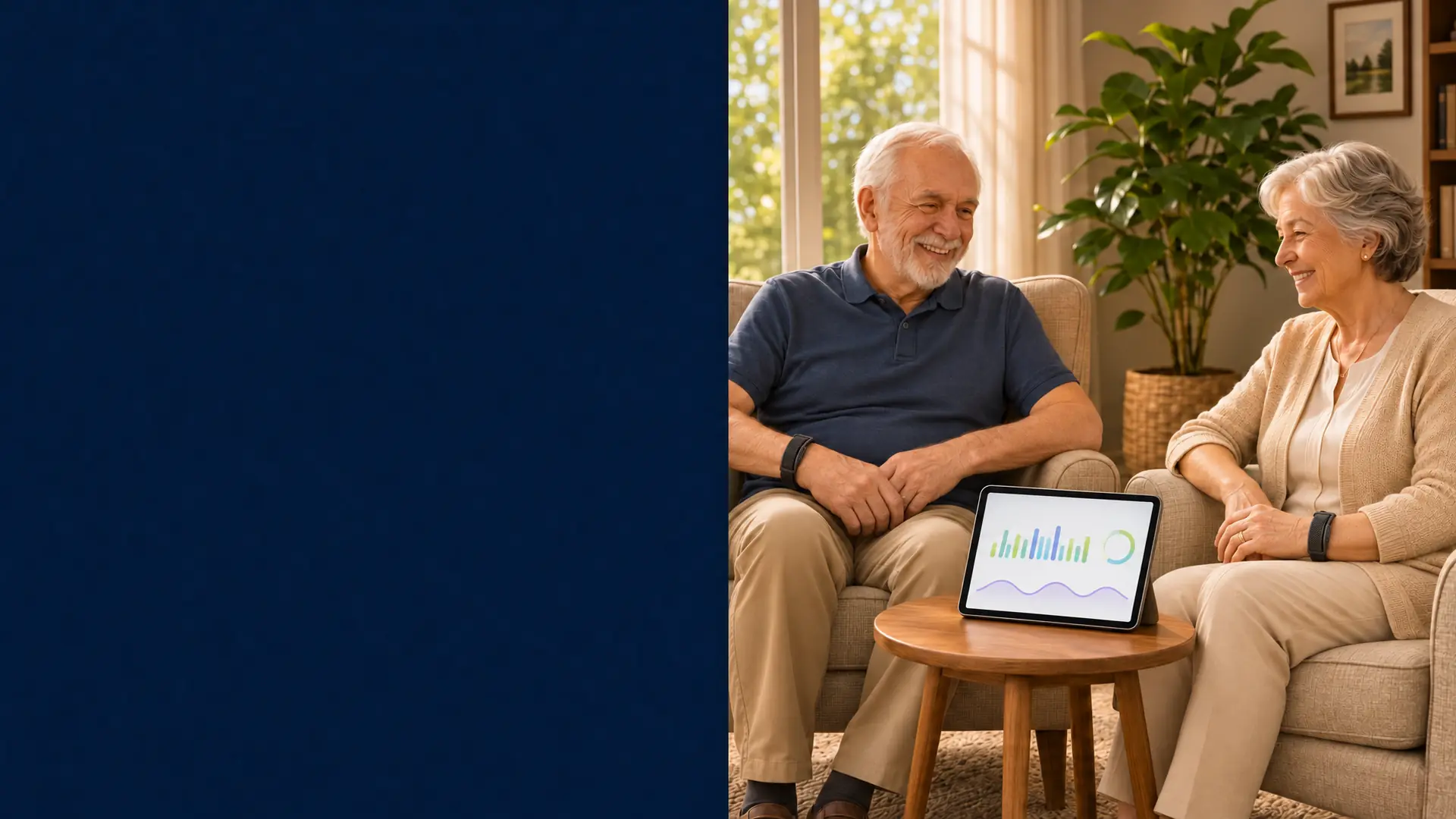
Give residents a comfortable branded band and give staff weekly activity and sleep trends. Sensor Bio supplies the hardware, the data and the dashboard.
The short version
Senior living technology covers the tools communities use to support residents day to day. Sensor Bio provides comfortable, screenless wellness bands under the community's brand, plus SDKs, a REST API and a dashboard that show general wellness trends such as activity, sleep duration and resting heart rate, so staff can see changes over weeks.
- Branded hardwareCommunity-branded bands, starting with Sensor Bio V2.
- Remote monitoring dashboardWeekly wellness trends for staff, no code.
- SDKs and APIsBring trends into your resident app or care software.
- Accelerometer and activity data3-axis movement data for activity and rest patterns.
- AlgorithmsSleep and activity summaries.
The real problems, and how the stack solves each one
Activity drops quietly
Public health guidelines recommend at least 150 minutes a week of moderate activity for older adults, plus balance and strength work.[1]
How Sensor Bio helpsDaily activity and active minutes per resident, rolled up weekly so staff can see who is moving less.
Sleep changes with age
Older adults often sleep more lightly and wake more at night, and poor sleep affects how people feel during the day.[2]
How Sensor Bio helpsNightly sleep duration and consistency trends, without cameras or bed sensors.
Staff time is limited
Teams cannot check in with every resident every day in the same depth.
How Sensor Bio helpsA dashboard that highlights trend changes your team chooses to watch, so check-ins go where they help most.
Devices residents will not wear
Screens, small buttons and daily charging get in the way for many residents.
How Sensor Bio helpsA soft, screenless band with 5 to 7 days per charge that staff can charge on a weekly routine.
What you could build
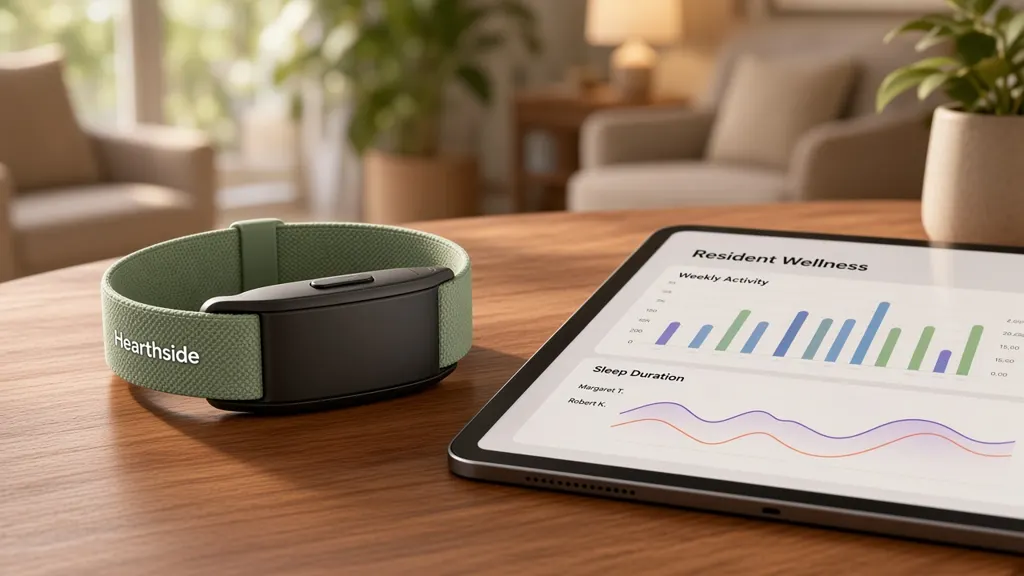
Hearthside: a resident wellness program (Concept)
A senior living operator gives residents a sage-green Hearthside band. Data syncs through a hub phone in each wing, and the wellness team opens a weekly trends board with activity and sleep per resident. Families can see a simple weekly summary in the community app.
Sensor Bio pieces
- Branded hardware
- Mobile SDK
- REST API
- Remote monitoring dashboard
Data streams
- 3-axis accelerometer
- Steps and active minutes
- Sleep duration
- Resting heart rate
- HRV
Example metrics
- Weekly active minutes
- Nightly sleep duration trend
- Rest and activity pattern
- Resting heart rate trend
- Band wear time
- 1Community-branded bands
- 2Hub phone or resident app (SDK)
- 3Sensor Bio cloud
- 4REST API
- 5Staff dashboard and family summary
Residence activity and sleep trend explorer
Switch between wings and weeks to see activity and sleep trends. Example data, not a fall or alert system.
From first call to live data
Step 1
Choose the trends
Pick the wellness measures your team will review each week.
Step 2
Brand and fit bands
Community branding and a charging routine that fits your staff.
Step 3
Connect
Use the dashboard as is, or bring data into your resident app through the API.
Step 4
Review weekly
Look at changes over weeks, not single readings.
Questions, answered.
Is Sensor Bio a fall detection system?
No. Sensor Bio provides general wellness trends and raw accelerometer data. It is not a fall detection or emergency alert system and should not replace one.
What can staff see?
Weekly activity, sleep duration, resting heart rate and wear time per resident, as trends over time.
Can the band carry our community brand?
Yes. Strap color, logo and packaging can be branded, starting with Sensor Bio V2.
How often does the band need charging?
Sensor Bio V2 runs 5 to 7 days per charge, so most teams charge bands on a weekly routine.

The infrastructure layer for wearables.
Tell us what you want to build.
Book a demo and we will scope the hardware, the data and the first integration with your team.
Sensor Bio V2 is a general wellness device. It is not FDA cleared and is not intended to diagnose, treat, cure or prevent any disease. Example builds are concepts, not customer deployments.